In a nutshell
- 🎯 Salt amplifies flavor by suppressing bitterness, enhancing sweetness and umami, and boosting aroma—making food taste more like itself, not just salty.
- ⚗️ Quick chemistry reshapes texture: osmosis draws and redistributes moisture, while the Maillard reaction intensifies browning, transforming tomatoes, steaks, and ceviche in seconds to minutes.
- 🧂 Choose crystals with intent: table salt hits fast, Kosher salt seasons evenly, and flaky sea salt adds crunch; timing (early vs. finishing) determines depth or sparkle.
- 🍳 Practical moves: dry-brine meats for juiciness, salt veg before roasting for color, season soups in small increments, and use finishing flakes on steaks, salads, chocolate, even coffee.
- 🧭 Core rule: prioritise balance—season early for structure, finish late for clarity—and taste as you go for precise control.
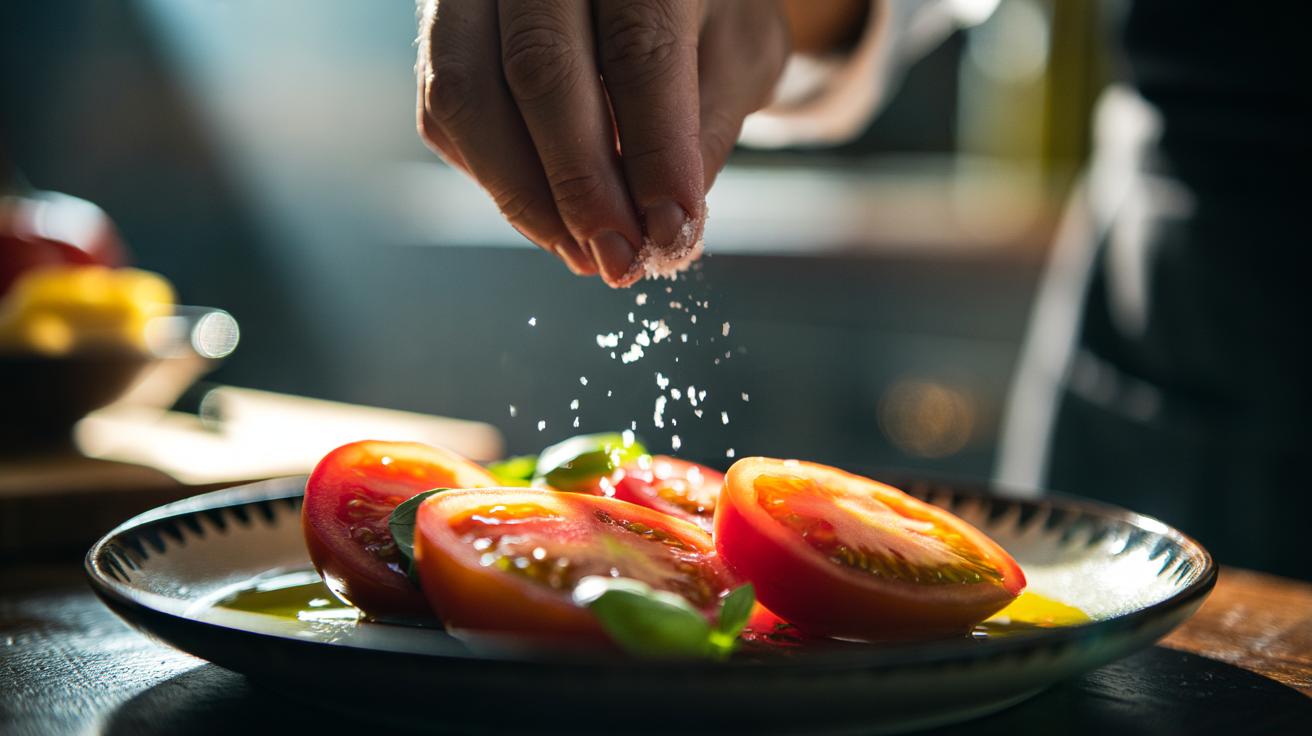
A pinch. That’s all it takes for a flat dish to flare into focus. In professional kitchens and home pans alike, salt is the fastest way to bring flavors into alignment, sharpen aromas, and turn texture from limp to lively. It works not by masking but by illuminating. Salt doesn’t just make food salty; it makes food taste more like itself. Whether you’re brightening tomatoes, taming bitterness in greens, or coaxing sweetness from strawberries, that quick sprinkle is chemistry at speed. Here’s how the mineral most maligned and most essential becomes the cook’s cleanest, simplest trick for instant transformation.
Why Salt Changes Everything
Salt interacts with our senses on multiple fronts at once. Sodium ions suppress bitterness and enhance sweetness and umami, which means fewer off-notes and more savory depth in a heartbeat. Chloride ions modulate acidity, altering how bright or dull a bite feels. Meanwhile, salt frees up volatile aroma compounds, so what you smell becomes more vivid. This is why a tomato with a grain of salt tastes juicier, rounder, almost sun-warmed. Your brain receives a louder, better-balanced signal. The result is perceived freshness and complexity, not a one-note salinity.
On the surface of food, salt draws out moisture by osmosis. A little moisture dissolves the crystals, then flows back carrying dissolved flavors deeper into the bite. That briny shuttle rearranges texture: crisping cucumber, firming raw fish in ceviche, and kickstarting the Maillard reaction on steaks by drying the surface for fiercer browning. In seconds, the structure changes; in minutes, it transforms.
Salt is a conductor for taste, not just a seasoning. It aligns sweetness, acidity, and bitterness so each plays its part. Used well, it makes meals feel complete.
The Right Salt, the Right Moment
Not all crystals behave the same, and timing is everything. Kosher salt and coarse sea salt dissolve at a measured pace, making them ideal for even, intuitive seasoning while you cook. Table salt is denser and saltier by volume; a teaspoon hits harder, faster. Flaky sea salt delivers crunch and delayed bursts of salinity on finished dishes. Choose the crystal for the job, then choose when it should act. Early salting draws moisture and builds depth; late salting adds snap and sparkle. Think of it as rhythm: early for structure, late for accent.
| Salt Type | Crystal Size | Dissolves | Taste Impact | Best Uses | Relative Saltiness (by volume) |
|---|---|---|---|---|---|
| Table Salt | Fine | Very fast | Intense, immediate | Baking, precise brines | High |
| Kosher Salt | Medium | Moderate | Even, forgiving | Everyday cooking, dry brining | Medium |
| Flaky Sea Salt | Large, delicate | Slow on cool foods | Crunch, finishing pop | Finishing steaks, salads, chocolate | Lower |
Match timing to technique. Early salting meat—an hour or overnight—lets salt dissolve proteins, retain moisture, and season deeply. Adding salt early to onions helps them sweat, softening faster and sweeter. Finishing a risotto? A last-minute sprinkle of flaky salt gives contrast and clarity without over-tightening the starch.
The same mineral, different moments—different outcomes. Respect density, crystal size, and volume. Taste as you go, and you control the arc from subtle to spectacular.
Practical Sprinkling: from Pan to Plate
Start with a baseline: season early, lightly, evenly. Hold your hand high for a fine, even snowfall of crystals; you’ll avoid salty pockets and hit every surface. Dry-brine poultry or pork with kosher salt for at least 1 hour (up to 24) to firm texture and amplify juiciness. For vegetables, salt before roasting to draw surface moisture, creating better browning. A wet surface won’t brown; a seasoned, dried surface will. In soups and sauces, add small pinches throughout. Each addition resets the balance as flavors concentrate.
Use finishing salts as accents. A few flakes on a seared steak give crunch and aromatic lift. On chocolate tart or caramel, salt sharpens sweetness and deepens cocoa notes. Try a pinch in coffee to mute bitterness without sugar. With tomatoes, cucumbers, or watermelon, salt concentrates juiciness and floods the palate with aroma. Even scrambled eggs benefit: a minute’s head start with salt dissolves proteins for custardy curds.
Mind the edges. Salt rim a margarita glass for contrast against lime and tequila. Sprinkle roasted nuts while hot so crystals adhere. When in doubt, pause, taste, then adjust. Big flavor is built in sprinkles, not dumps.
Salt is the quiet editor of taste—shaving excess, brightening lines, and bolding the words that matter. In seconds, a pinch can turn watery tomatoes into summer, take chocolate darker, make steaks sing, and give salads lift. Treat crystal size and timing as tools, not trivia, and you’ll cook with more control, less effort. Balance beats bravado. Season early for structure, finish late for sparkle, taste always for truth. What will you transform tonight with just a sprinkle, and how will you time it to make your flavors soar?
Did you like it?4.5/5 (25)