In a nutshell
- 🍲 Using aluminium foil as a floating lid creates gentle reflux, trapping aromatics and intensifying broth flavour quickly without aggressive reduction.
- 🔥 The double-lid method—foil on the surface plus a pot lid—stabilises heat, reduces evaporation, and speeds up extraction for richer, clearer results.
- 🧪 Smart variations include a foil cartouche with vent holes, a rim foil collar to guide condensation, and perforated foil sachets for tidy spice infusions.
- 🛡️ Safety tips: use a non-reactive pot, pair parchment with foil for acidic broths, avoid airtight seals, and recycle or reuse heavy-duty foil where possible.
- 🕒 Practical wins: faster Maillard depth via foil-lined roasting trays, less kitchen humidity, lower energy use, and weeknight-ready broth with a long-cooked taste.
Home cooks chase depth in soup broths, yet time often gets in the way. There’s a quick, ingenious fix hiding in the drawer: kitchen foil. Used thoughtfully, aluminium foil changes how heat and vapour behave, turbocharging extraction and capturing aromatics that usually drift away with steam. It’s low-tech, cheap, and astonishingly effective. Pressed onto the surface as a makeshift cartouche or combined with a regular lid, foil creates a mini-reflux system that intensifies flavour fast. This is not about gimmicks; it’s controlled physics at the hob. If you want clearer, richer broth in less time, this is the trick worth learning tonight.
Why Foil Supercharges Broth
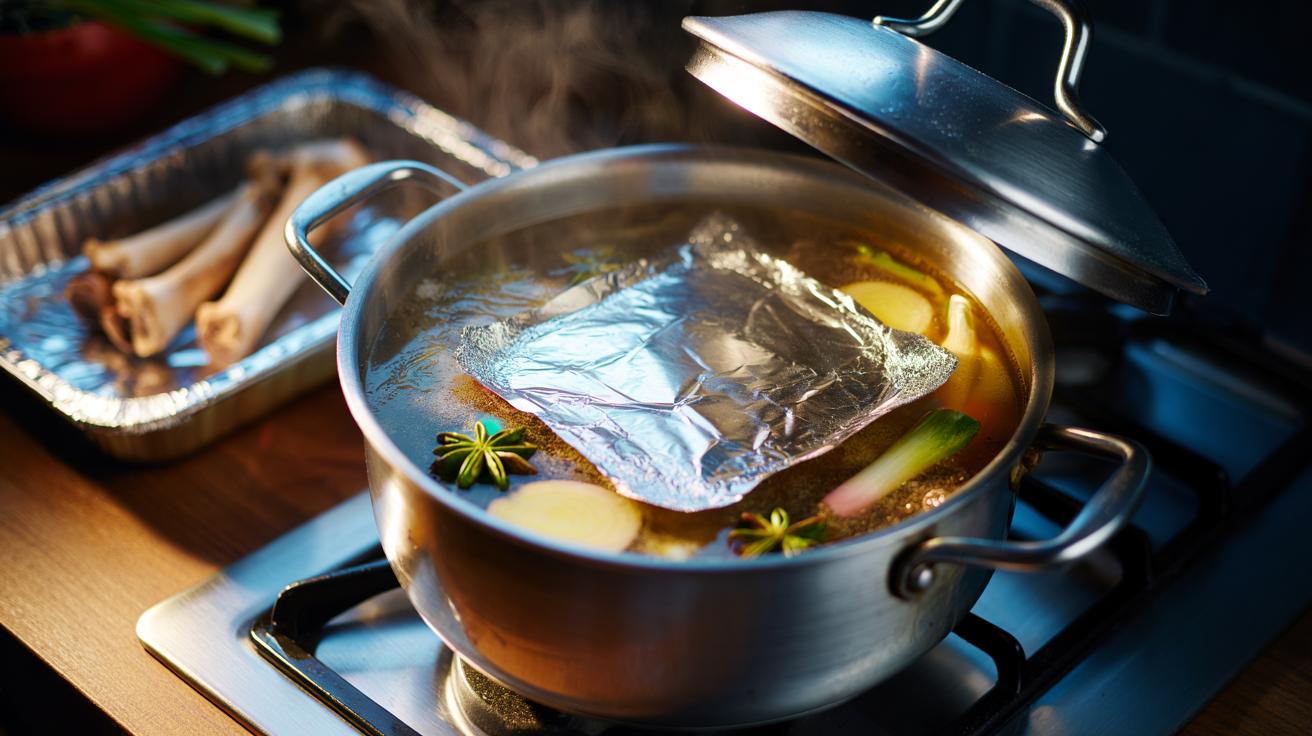
Broth improves when two things happen at once: efficient extraction from bones, meat, and vegetables, and retention of delicate aromatics. A sheet of foil encourages both. Press it directly onto the liquid so it just kisses the surface. Now vapour condenses on the cool foil, drips back, and forms a gentle reflux. You preserve volatile notes from ginger, allspice, star anise, or citrus peel that would otherwise evaporate. At the same time, heat distribution settles. Fewer rolling boils. More steady, solvent-like simmering that coaxes collagen, glutamates, and mineral sweetness into the pot.
There’s another gain: speed. With foil acting as a floating lid, you reduce evaporation losses without sealing the pot entirely. That means you can run a slightly higher simmer without violent reduction, achieving the taste of a long cook in a shorter window. Instead of thinning out your broth to chase intensity, you intensify while maintaining clarity. It’s efficient, economical, and it keeps the kitchen cooler, because less water escapes as steam. The result is a broth that tastes aged, but within an evening’s work.
The Double-Lid Method: A Faster, Deeper Extract
This is the workhorse technique for weeknight intensity. Start by maximising flavour precursors: roast bones and aromatics on a foil-lined tray at 220°C until deeply browned, collecting sticky drippings. Deglaze the tray with hot water and scrape everything into a non-reactive pot. Bring to a simmer, skim briefly, then lay a sheet of heavy-duty foil directly on the surface, pressing it to the edges so only a few small gaps remain. Fit the regular lid on top. You’ve created a double-lid: foil for surface reflux, lid for thermal stability.
Simmer for 45–90 minutes depending on ingredients. Chicken backs transform in under an hour; root veg and dried mushrooms give up their soul in 30–40 minutes. The foil traps fragrant compounds and accelerates gelatin release, while preventing the over-reduction that muddies freshness. The broth concentrates by extraction, not by aggressive boiling. When done, lift the foil, strain gently, and season late. You’ll notice glossier body, a cleaner finish, and a longer, more resonant savoury tail on the palate.
| Step | Why It Matters | Typical Time Saved |
|---|---|---|
| Roast on foil-lined tray | Boosts Maillard depth; easy deglaze | 30–45 minutes vs. raw simmer |
| Foil-on-surface | Captures aromatics via reflux | 10–20 minutes to equal longer cooks |
| Lid over foil | Thermal stability, minimal evaporation | Prevents extra reduction time |
Smart Variations: Foil Cartouche, Reflector, and Aromatic Pouches
The simplest variation is a foil cartouche: cut a round from foil the size of your pot, poke five or six pea-sized holes, and float it on the broth. The vents keep a lazy simmer while steam condenses back into the liquid. It’s brilliant for delicate fish or mushroom broths you don’t want to bruise with a lid. For fast stocks, switch to the near-sealed double-lid to capture every whisper of spice or herb.
Need more heat without splashes? Crimp a narrow foil collar around the pot rim to guide stray condensation back inside. On gas hobs, a loose foil “reflector” tented around the lower sides can reduce drafts and heat loss. For a tidy infusion, make a perforated foil sachet: wrap crushed spices or charred spring onions, pierce the packet, and drop it in. You’ll extract cleanly and remove it in one move. These tiny tweaks stack effects—better extraction, steadier simmer, fewer losses—into a noticeable leap in flavour.
Safety, Sustainability, and Practical Kit
Use heavy-duty aluminium foil and a non-reactive pot (stainless steel, enamelled cast iron). For highly acidic broths—think tomato or tamarind—keep contact time modest or place a parchment round beneath the foil. Don’t store acidic soups against foil. On induction, the double-lid holds heat so well you can drop to a whisper of power; on gas, aim for pinhead bubbles. Reuse clean foil cartouches when possible and recycle once spent. A ladle, fine strainer, and a baking tray are the only extras you need.
The goal is not airtight sealing but controlled reflux and even simmering. Trim scum early, then let the foil do the quiet work. If clarity matters, avoid turbulent boils and skip aggressive stirring. For everyday cooking, this trick turns backs, wings, and veg trimmings into dinner-party broth with minimal fuss. It’s kinder on energy bills too, because less vapour means less wasted heat, and your kitchen stays calmer and drier.
| Item | Best Use | Notes |
|---|---|---|
| Heavy-duty foil | Cartouche, double-lid | Holds shape; reduces tears |
| Parchment + foil | Acidic broths | Parchment faces liquid |
| Foil-lined tray | Roasting bones/veg | Easy deglaze, less scrubbing |
Used with care and a touch of curiosity, foil acts like a tiny laboratory tool in your kitchen, bending heat and vapour to your will. It makes light work of the slow-cooking paradox: intensity without hours on the hob, clarity without brutal reduction, fragrance without loss. A simple sheet can lift an ordinary pot to restaurant-level broth. Ready to test it on your next chicken carcass, mushroom trimmings, or miso base—and if you do, which variation will you try first, the cartouche or the full double-lid?
Did you like it?4.6/5 (20)