In a nutshell
- 🔬 The science: vinegar’s acid reacts with baking soda to release CO₂ bubbles, boosting rise while gently weakening gluten for a tender, airy crumb.
- 🧪 Choose and measure: use white distilled (neutral), apple cider (fruity), or rice vinegar (delicate); aim for 1 tsp per 250 ml milk, reducing if using buttermilk/yoghurt.
- 🥞 Method that works: make faux buttermilk by resting milk + vinegar 3–5 minutes, then fold wet into dry with minimal mixing, rest 5 minutes, cook on medium-low heat, flip when bubbles pop.
- ⚠️ Troubleshooting: flat stacks mean delay—cook within 10 minutes; tangy taste = too much acid; dense centres signal heat too high—lower the flame and keep stirring to a minimum.
- 🍯 Flavour and lift boosts: try apple cider vinegar with banana, fold in frozen blueberries, whip and fold egg whites for extra loft, and go dairy-free with plant milk plus a touch more baking powder.
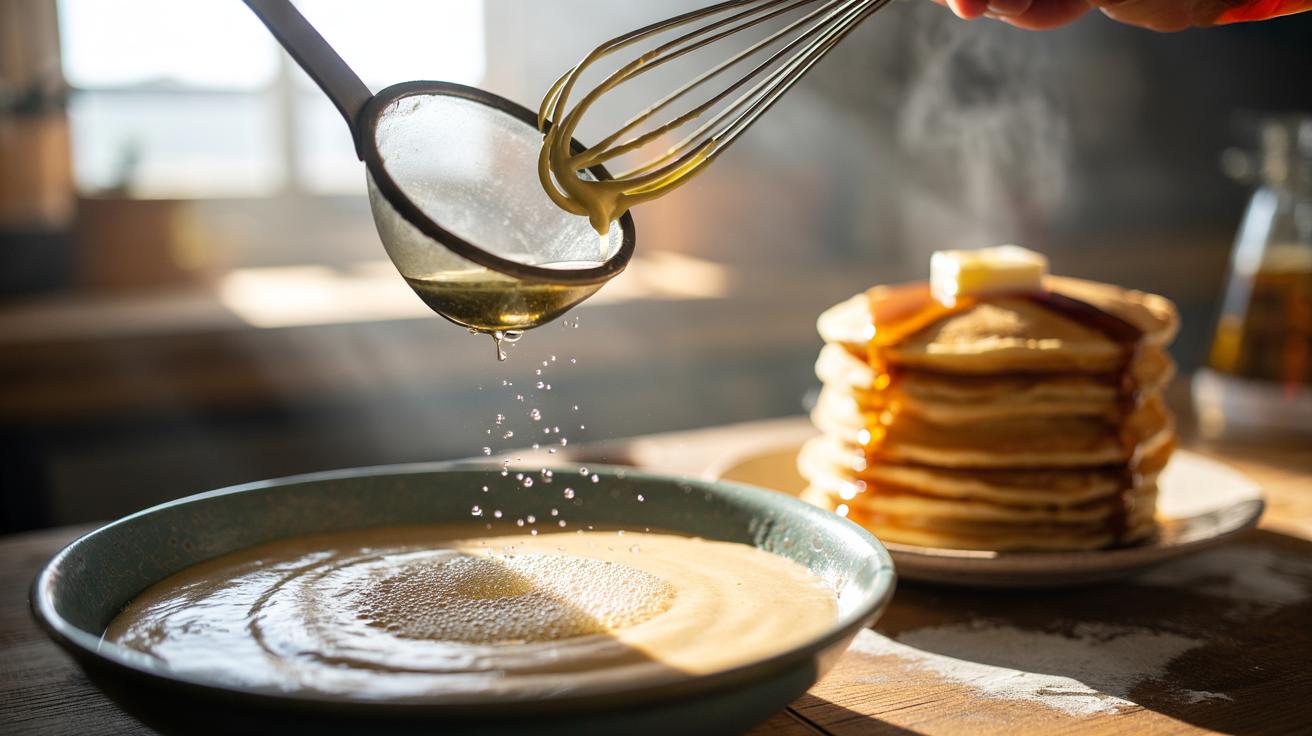
British breakfasts love a good pancake, yet many home cooks quietly admit defeat to flat, chewy discs. The fix is unexpectedly simple and a little scientific. Add a small, strategic dose of vinegar, let chemistry do the heavy lifting, and watch your batter bloom into cloud-like stacks. The trick is not about sourness. It’s about acidity triggering gas bubbles and tenderising proteins so the crumb stays soft, airy, and moist. It only takes a teaspoon to transform texture. You won’t taste sharpness if you balance quantity and timing. What you will taste is lift, delicacy, and the kind of breakfast that makes a dreary morning feel like a bank holiday.
The Science: Acid Meets Baking Soda for Lift
Fluffy pancakes are a story of bubbles. When acid collides with bicarbonate of soda (or the bicarbonate within baking powder), carbon dioxide is released. Those microscopic bubbles expand on the griddle’s heat, creating height and tenderness. Vinegar acts fast. It switches on the fizz as soon as it hits an alkaline base, so you gain lift even before the first ladle touches the pan. Timing matters because premature fizzing can vanish if you overmix or wait too long. The best results come from controlled activation, minimal stirring, and quick cooking.
There’s more. Acidity gently weakens gluten development in wheat flour, the very network that can make pancakes rubbery if mishandled. A mild acid tilts that balance towards a softer, looser structure without turning the batter into soup. It also helps proteins set at just the right moment, keeping the crumb open rather than tight. Result: tender middles, crisp edges, and a consistent rise. The aroma stays clean, the mouthfeel light, and the stack remains buoyant even as it cools on the plate.
One caveat: too much acid will make the batter slack and the flavour sharp. Keep the ratio measured, match it to your leavening, and your pancakes will stand tall with a delicately custardy bite.
Choosing the Right Vinegar and Quantity
Not all vinegars behave—or taste—the same. White distilled vinegar is neutral and predictable, a reliable partner for weekday batter. Apple cider vinegar brings a gentle fruitiness that flatters vanilla and cinnamon. Rice vinegar is soft, elegant, and low in assertiveness; it’s the stealth choice. Malt or wine vinegars? Lovely in savoury cooking, but their bolder notes can peek through in sweet pancakes. For most family recipes, 1 teaspoon per 250 ml milk or 150 g flour is the sweet spot. Sensitive palate? Start at 1/2 teaspoon and scale up if needed.
| Vinegar Type | Acidity | Flavour Notes | Best For | Typical Amount |
|---|---|---|---|---|
| White Distilled | 5% | Neutral, clean | Classic fluffy stacks | 1 tsp / 250 ml milk |
| Apple Cider | 5–6% | Fruity, warm | Vanilla, cinnamon batters | 1 tsp / 250 ml milk |
| Rice Vinegar | 4–5% | Delicate, soft | Light, baby-friendly batters | 1–1.5 tsp / 250 ml milk |
| Malt | 5–6% | Toasty, malty | Chocolate chip, banana | 1/2–1 tsp |
| White Wine | 6% | Bright, aromatic | Berry toppings, crème fraîche | 1/2–1 tsp |
Balance is the watchword. If your recipe already uses buttermilk or natural yoghurt, reduce or skip the vinegar because those ingredients provide acid. Using only milk? Vinegar instantly creates a pseudo-buttermilk, lightly curdling the dairy and building flavour. Too much vinegar won’t just taste sharp; it can collapse the batter’s structure by over-weakening gluten. Measure carefully, stir briefly, and target a batter that ribbons slowly from the spoon.
Step-by-Step Method for Fluffier Pancakes
Start with your dry mix: flour, a generous teaspoon of baking powder, a pinch of bicarbonate of soda if you’re using low-acid dairy, sugar, and salt. In a jug, whisk milk and a teaspoon of vinegar, then let it sit for 3–5 minutes. You’ll see gentle curdling. That’s your faux buttermilk forming. Add eggs and melted butter to the jug and whisk just to combine. Pour wet into dry. Fold with a spatula eight to ten strokes. Stop while streaks remain. Lumps are good; overmixing is the enemy of lift. Rest five minutes to allow bubbles to form and flour to hydrate.
Preheat a non-stick pan over medium-low. A cooler pan helps thick batter rise before the base browns. Lightly oil, then wipe with kitchen paper for a thin film. Ladle batter. When bubbles pop and the edges look set, flip decisively. Cook until springy to the touch. Keep the first batch warm in a low oven while you finish the stack. If you like extra height, add a spoonful more batter onto each pancake just before flipping, creating a layered lift. Serve immediately with berries, a dab of salted butter, and warm maple syrup.
Pro tip for weekends: separate the eggs. Beat the whites to soft peaks and fold into the vinegar-enriched batter. It’s theatrical. It’s effective. But even without that flourish, the vinegar will deliver dependable loft and a tender, soufflé-like crumb.
Troubleshooting and Flavour Tweaks
Flat pancakes? You may have waited too long after mixing. Cook within 10 minutes to exploit active bubbles. If the flavour seems tangy, you probably overshot the vinegar or paired it with a highly acidic dairy. Reduce the dose next time or switch to rice vinegar for subtlety. Dense centres often indicate a pan set too hot, scorching the exterior before the middle can rise. Lower the heat and give the batter a brief rest. Think steady heat, light hand, quick cook. That trio solves most breakfast woes.
For flavour, vinegar is a quiet enhancer. Apple cider vinegar flatters caramelised bananas and brown sugar. White distilled lets vanilla shine. A drop of almond extract, a zest of lemon, or a spoon of rye flour can add intrigue without heaviness. Try folding in blueberries from frozen—no need to thaw—so they chill the surrounding batter and amplify the rise. Chocolate chips? Use fewer than you think; too many weigh down the bubbles.
If you want café-style luxury, swap part of the milk for crème fraîche and keep the vinegar minimal. For dairy-free, pair plant milk with a teaspoon of vinegar and a touch more baking powder. The acid-base dance still works. Texture remains plush, edges still lace. Breakfast smiles resume.
Vinegar in pancakes sounds radical until you taste the results. A tiny, carefully measured dose turns batter buoyant, crumb tender, and mornings brighter. It’s thrifty. It’s reliable. It rewards patience and light hands on the whisk. You don’t need special flour or fancy gear—just a teaspoon and an eye for bubbles. From weekday stacks to celebratory brunches, the method scales beautifully. Ready to trade flat for fluffy and experiment with your favourite vinegar to fine-tune both lift and flavour—what will you whisk first this weekend?
Did you like it?4.6/5 (26)