In a nutshell
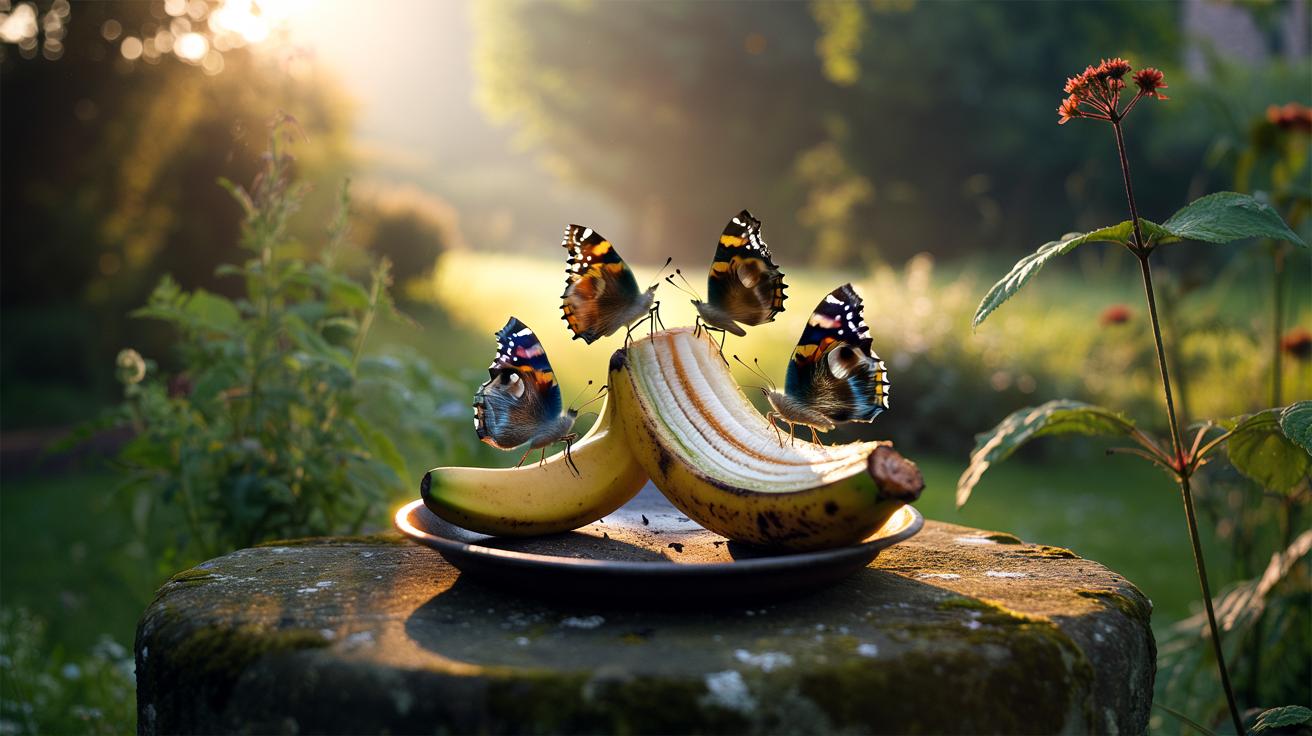
- 🦋 Why it works: banana peels release sugars and fermentation scents that attract UK species like Red Admiral, Peacock, and Comma, providing quick energy and trace minerals.
- 🍌 Safe bait method: use a ripe, spotted peel in a shallow dish, bruise lightly, keep it tidy, refresh daily, and avoid alcohol, pesticides, and mould; consider a mesh bag to deter birds.
- 🧭 Smart placement: choose morning sun, 30–100 cm off the ground, 5–8 m from doors, and warm, still days; pair with buddléia, verbena, and echinacea for nectar and scent synergy.
- 🌿 Habitat matters: support lifecycle with host plants like nettles, hop, and holly/ivy, add a mineral-rich puddling tray, and skip broad-spectrum chemicals.
- ♻️ Low waste, big impact: turn leftovers into a natural spectacle by keeping stations small, clean, and consistent, bridging nectar gaps through late summer and early autumn.
Forget the pricey pollinator kits. The secret to a fluttering, jewel-bright garden could be softening in your kitchen caddy. When a banana peel begins to brown, it releases sugars and scent compounds that many butterflies find irresistible. In the UK, species like the Red Admiral and Comma are notorious fruit feeders, slipping from flower to fruit as seasons shift or nectar wanes. With a little care, leftovers can become a miniature wildlife event. What follows is a practical, science-backed guide to turning household scraps into a natural spectacle, without mess or nuisance. You’ll learn why it works, how to prepare the bait safely, where to position it, and how to pair it with the right plants for a lasting parade of wings.
Why Banana Peels Lure Butterflies
The lure is chemistry. As a banana peel ripens, enzymes break starches into sugars. Fermentation follows, producing volatile compounds that travel on the breeze like a dinner bell. Some butterflies, notably Red Admiral, Peacock, and Comma, evolved to exploit rotting fruit when flowers are scarce. They’re not being naughty; they’re being opportunists. Sugars provide quick energy for flight and thermoregulation, while trace minerals help with reproduction and wing maintenance. The peel also retains moisture, creating tiny sip points where butterflies can probe with their proboscis.
Different species cue into different scent notes, so a peel’s changing bouquet across a day can draw a rolling cast. Early, it’s sweet. Later, it becomes tangy. At peak fermentation, it’s complex. That’s often when the spectacle begins. Beyond energy, the peel can deliver potassium and magnesium, nutrients that support muscle function. Butterflies may also “puddle,” taking up minerals dissolved by dew or a sprinkle of water over the peel. Place it right, and you create a micro-feeding station that works even when wind or rain makes nectar unreliable.
Step-by-Step: Making a Safe Banana Peel Bait
Start with a ripe, spotted peel. Scrape a little of the soft inside to boost sugars, then lightly bruise the skin to accelerate scent release. Lay the peel open in a shallow dish or on a flat stone. Keep it off bare soil to reduce slug traffic. For a faster lure, mash a teaspoon of the banana flesh into the peel and add a splash of water; this kicks off mild fermentation without resorting to beer or spirits, which can harm insects. To minimise wasp interest, use modest quantities and avoid placing near outdoor seating.
Refresh daily in warm weather. Remove any peel that turns slimy or mouldy; compost it and replace. If birds tug, anchor the peel with small stones or place it in a mesh produce bag secured to a twig, allowing proboscises in but thwarting theft. Never use pesticides or fungicides on or near the bait. Wash the dish regularly to prevent flies from breeding. If ants find it, add a thin moat of water around the dish or move the station to a raised, isolated perch. The principle is simple: sweet, safe, small, and consistently tidy.
Positioning, Timing, and Weather Tips
Butterflies are solar powered. Place the bait where early sun warms the air, ideally near sheltering shrubs that block gusts. Slightly dappled light is fine; full shade is not. In the UK, late spring through early autumn is prime, with a notable surge on warm, still afternoons. Avoid windy corners and high-traffic paths. If you have a cat, keep the station 1 metre off the ground to reduce risk. Pair the peel with flowers like buddléia, verbena, and echinacea, so visitors can switch between fruit energy and nectar.
| Factor | Recommendation | Why It Matters |
|---|---|---|
| Sun | Morning to early afternoon light | Warms butterflies for flight and feeding |
| Height | 30–100 cm off ground | Reduces slugs, deters pets |
| Distance | 5–8 m from doors | Limits wasp-human conflict |
| Weather | Warm, still, dry days | Maximises activity and scent travel |
On cooler days, warm stone or brick helps radiate heat around the bait. In heatwaves, mist lightly to refresh aromas and provide safe sip points. Rotate locations weekly to prevent ant trails becoming permanent superhighways. Small adjustments often double your sightings.
Beyond Bait: Planting and Habitat to Keep Them Coming
A peel starts the party, but habitat keeps it going. Think in layers. For caterpillars, offer host plants: nettles (for Red Admirals and Peacocks), hop (Comma), and holly or ivy (for Holly Blue). For adults, design a nectar calendar—spring primroses, summer lavender, and late-season sedums. Leave a shallow “puddling” tray with mineral-rich sand; a pinch of crushed, unsalted sea salt provides trace elements butterflies crave. Avoid peat-based composts and broad-spectrum pesticides, which collapse the food web butterflies rely on.
Provide a sunny, wind-sheltered corner with rough edges: a log for basking, a patch of unraked leaves, gaps for warmth to accumulate. If you have room, let a small strip go wild and bloom. Pair this with occasional banana peel stations when nectar dips—late summer after drought, or early autumn as ivy blossoms begin. You’re not feeding constantly; you’re bridging gaps. Consistency beats quantity. When the garden offers nectar, minerals, warmth, and shelter, the peel becomes a highlight rather than a crutch.
A banana peel feels laughably humble, yet the results can be sensational. It’s resourceful, circular, and fun for children who learn to spot species by wing shape and behaviour. Keep it clean, keep it modest, and link the lure to a resilient planting palette. In time, your garden becomes a stage, and the butterflies write the script. One scrap at a time, you choreograph colour on the breeze. Will you try a peel this weekend—and which sunny nook will you choose for your first butterfly banquet?
Did you like it?4.3/5 (23)