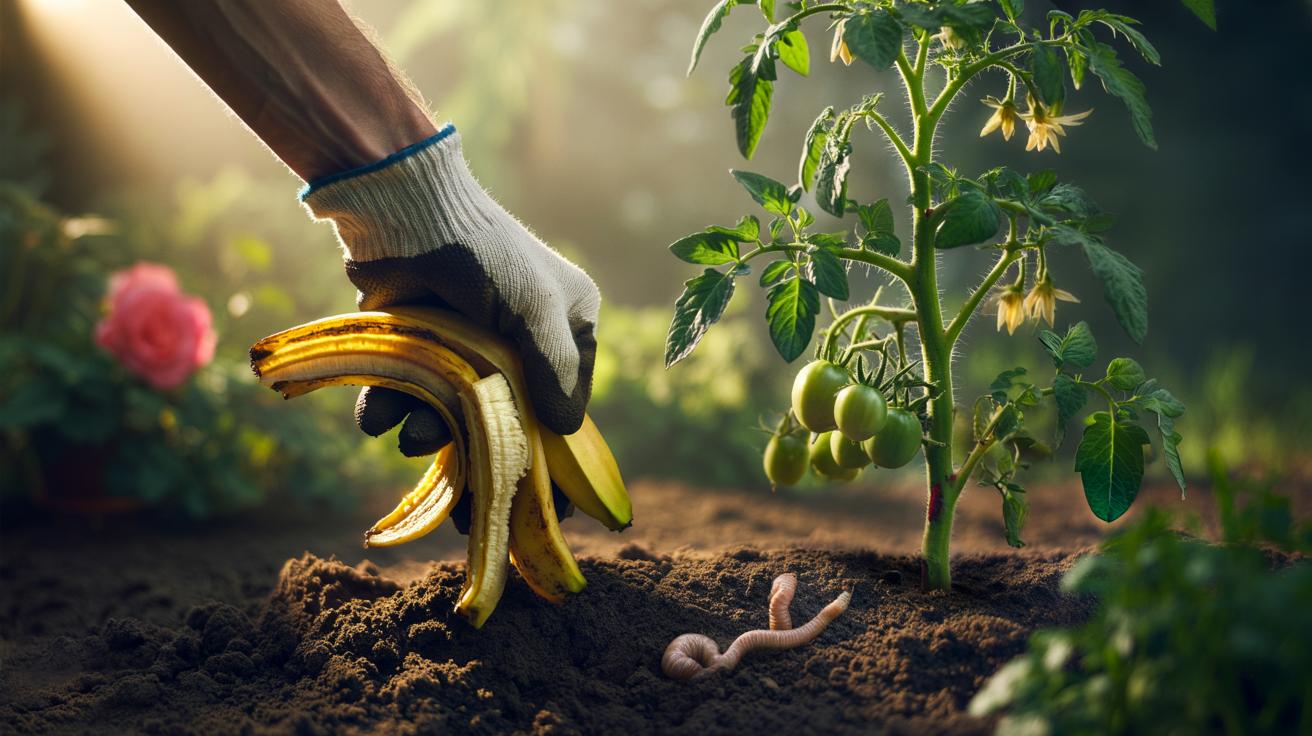
In a nutshell
- 🌱 Banana peels act as a slow-release source of potassium, plus calcium and trace minerals, supporting flowering, fruit quality, and stress tolerance.
- 🧪 They energise the soil microbiome, improving structure and nutrient availability; think helper, not complete fertiliser due to low nitrogen.
- 🧰 Best practices: compost chopped peels, make low-heat peel powder for pots, trench-bury pieces in beds, or feed small amounts to a wormery.
- ⚠️ Avoid mistakes: don’t leave whole peels on the surface, don’t overuse “peel tea,” and always balance with nitrogen-rich materials to prevent stalled growth.
- ♻️ Sustainable payoff: cuts household waste, supports resilient soils, and often delivers steadier blooms and fruit—especially for roses and tomatoes.
Banana peels used to be the punchline of slapstick. In the garden, they’re quiet gold. Home growers across the UK have discovered that this humble kitchen scrap can support stronger stems, steadier flowering, and better fruit set in everything from roses to tomatoes. The science is simple, the practice thrifty. Peels deliver a flush of potassium and useful calcium, while feeding the soil life that does the heavy lifting. The trick is to use them wisely, not wildly. Whether you compost, powder, brew, or bury, you’re recycling nutrients, cutting bin waste, and giving beds a gentle, slow-release boost without reaching for synthetic fertiliser.
Why Banana Peel Works in Soil
At its core, a banana peel is a slow-release packet of potassium (K) with supporting roles from phosphorus (P), calcium (Ca), and trace minerals like magnesium and manganese. Potassium doesn’t create leafy growth; it fortifies water regulation, disease resilience, and the chemistry of flowering and fruiting. That’s why rose growers and tomato enthusiasts swear by it. Banana peel is helpful, but it is not a complete fertiliser. It’s low in nitrogen, so pairing it with nitrogen-rich inputs (well-rotted manure, legume-based compost, or grass clippings) preserves balance. As microbes decompose the peel, these nutrients convert into plant-available forms—no instant fireworks, just steady nourishment that aligns with natural soil cycles.
Equally important is the biological effect. Peels are a feast for bacteria and fungi, stimulating a thriving soil microbiome that improves structure and root contact with nutrients. Chopped peel disappears faster than whole, and mixing into compost hastens stabilisation, limiting odours and deterring pests. Think of peel as a catalyst for living soil rather than a stand-alone feed. It complements quality compost, mulch, and sensible watering. Used properly, it’s a circular solution: less waste, gentler inputs, stronger plants.
| Nutrient | Primary Role | Deficiency Clue | Peel’s Contribution |
|---|---|---|---|
| Potassium (K) | Flowering, fruit quality, stress tolerance | Scorched leaf edges, weak stems | High; slow release via decay |
| Phosphorus (P) | Rooting, energy transfer | Purple-tinged leaves, stunted roots | Moderate; supports early growth |
| Calcium (Ca) | Cell walls, blossom-end integrity | Blossom-end rot in tomatoes | Useful; depends on soil moisture |
| Magnesium (Mg) | Chlorophyll, photosynthesis | Interveinal yellowing | Trace; complementary |
Smart Ways to Use Banana Peels
Compost first. That’s the gold standard. Chop peels into 2–3 cm pieces, mix with “browns” like shredded cardboard, and keep the heap lightly moist. Composting stabilises nutrients and slashes pest appeal. In containers, sprinkle a fine peel powder made by oven-drying at low heat (about 90–100°C) and blitzing to dust; fold a tablespoon into the top few centimetres of compost for a 25–30 cm pot. It’s tidy, odourless, and easy to dose. For beds, trench-bury chopped peels 5–8 cm deep, at least 10 cm from stems, and cover well. The soil life does the rest.
Curious about liquid feeds? A 24-hour cold soak makes a mild “peel tea”. Strain and use to water flowering annuals and fruiting veg, then compost the spent pieces. Do not treat peel tea as a complete liquid fertiliser; it’s a supplement. If you keep a wormery, small chopped peels are welcome—sparingly—to avoid a fruit fly boom. Fermented options (Bokashi) are powerful, but apply the finished, soil-incorporated material rather than pouring raw leachate on roots.
Common Mistakes and How to Avoid Them
Leaving whole peels on the surface is an open invitation to foxes, rodents, and fruit flies. Bury, mulch over, or compost instead. Another misstep is overloading containers with wet peel or slurry; it clogs pore spaces, starving roots of air. Never tip anaerobic, foul-smelling peel liquid onto pot plants. Balance matters too. Because peels are K-rich and relatively low in N, plants in vigorous leaf-building stages may stall if you don’t match them with nitrogen sources. Aim for a mix of composted peels, well-rotted manure, and leafy green waste to keep growth even.
Beware magical claims. Peels don’t cure aphid outbreaks or “naturally” sterilise soil; they feed microbes and add minerals, that’s all. Overuse can nudge salinity and throw ratios out of kilter, particularly in small pots. Rinse very sugary peels if you must use them immediately in worm bins. Moderation and good hygiene beat any viral hack. Finally, timing: incorporate peel-based inputs ahead of peak demand—early flowering for roses, pre-truss set for tomatoes—to align decomposition with plant need.
Evidence, Results, and Sustainable Payoffs
Gardeners aren’t imagining it. Trials that increase available potassium routinely report sturdier stems, improved drought tolerance, and better fruit finish in K-hungry crops. Banana peel delivers that K in a slow, biologically mediated form, which suits soil-grown beds and mulched borders. While not every claim stands up—yield jumps depend on the whole fertility programme—there’s a credible, soil-first logic at work. The biggest wins often come from healthier soil rather than a single nutrient spike. In practice, roses hold blooms longer, tomatoes resist stress swings, and houseplants show crisper foliage when overall nutrition tightens up.
There’s an ethical dividend. Each peel kept out of the bin cuts collection, transport, and processing impacts, folding your kitchen into a small circular economy. For schools, community plots, and balconies, it’s a simple teaching tool: waste becomes resource. Blend this with leaf mulch, a winter cover crop, and rainwater, and you’ve built a resilient, low-input system. Stronger plants follow from steadier soils, not gimmicks. Use banana peel as a helper, not a crutch, and measure success by consistent growth, not one-off surges.
Used with a gardener’s eye, banana peel is an elegant, low-cost way to top up potassium, support the microbiome, and reduce household waste—all while keeping roses and tomatoes on song. It’s not a silver bullet, but it is a smart habit. Start small, keep it clean, and pair it with balanced organic matter for best results. Let your soil do the alchemy; you supply the scraps. Which method will you trial first this season—composting, powder, a careful trench-bury, or a wormery test—and how will you track the difference in bloom, vigour, and fruit set?
Did you like it?4.5/5 (21)