In a nutshell
- 🌹 Spent tea leaves provide gentle nutrients (notably nitrogen and potassium), mild acidity, and fibrous organic matter that can make roses look perkier by morning.
- 🧪 Tea subtly lowers soil pH, improving uptake of iron and manganese, while energising the soil microbiome—bacteria, fungi, and worms that release nutrients and improve structure.
- 🛠️ How-to: open cooled bags and sprinkle leaves at the dripline, rake into the top 2–3 cm, and avoid the crown; try “tea water” diluted about 1:10 and apply to already moist soil.
- 🫖 Best choices and timing: use black or green tea for gentle feeds, consider low-caffeine herbals like rooibos, avoid oil-heavy blends, and feed during growth flushes—spring, post-deadheading, and early autumn.
- ⚠️ Cautions: empty plastic-mesh sachets, skip milk/sugar, prevent matting, monitor pH, and pair with a balanced rose fertiliser—think synergy, not substitution.
Gardeners love a thrifty trick. Few feel as satisfyingly circular as turning yesterday’s brew into today’s bloom. Spent tea bags, once cooled and opened, can act as a gentle tonic for roses, nudging stronger growth while supporting a livelier soil food web. The effect isn’t sorcery. It’s science and timing. Tea leaves bring trace nutrients, mild acidity, and soft, fibrous organic matter that holds moisture where roots drink. Some readers swear they see buds perk up almost overnight; what they’re noticing is improved hydration and nutrient availability at the root-zone. This is a boost, not a miracle, but handled well it can help your roses flower harder and look fresher.
How Tea Bags Feed Roses
Even after steeping, tea leaves retain modest amounts of nitrogen and potassium, plus polyphenols such as tannins. These compounds, in contact with soil, break down into accessible nutrition while subtly lowering the rhizosphere’s pH. For roses—hungry yet finicky—this matters. Slight acidity increases the availability of iron and manganese, nutrients linked to greener foliage and robust bud formation. Meanwhile, the shredded leaves add a thin layer of organic matter that behaves like a mini-mulch, slowing evaporation and moderating temperature swings at the crown. That’s why plants can appear perkier by morning after an evening application.
The other engine at work is the soil microbiome. Spent leaves feed bacteria, fungi, and earthworms; their casting activity improves soil structure and drainage, releasing nutrients steadily. Do not rely on tea as your sole fertiliser. It’s an adjunct, best paired with a balanced rose feed. Think of tea as a dietary supplement that nourishes the helpers below ground. There’s nuance: traces of caffeine in some teas may inhibit germination of very fine seedlings, but established roses shrug it off. As ever, moderation and placement make the difference between a clever boost and a soggy mess.
Simple Methods: From Kitchen to Border
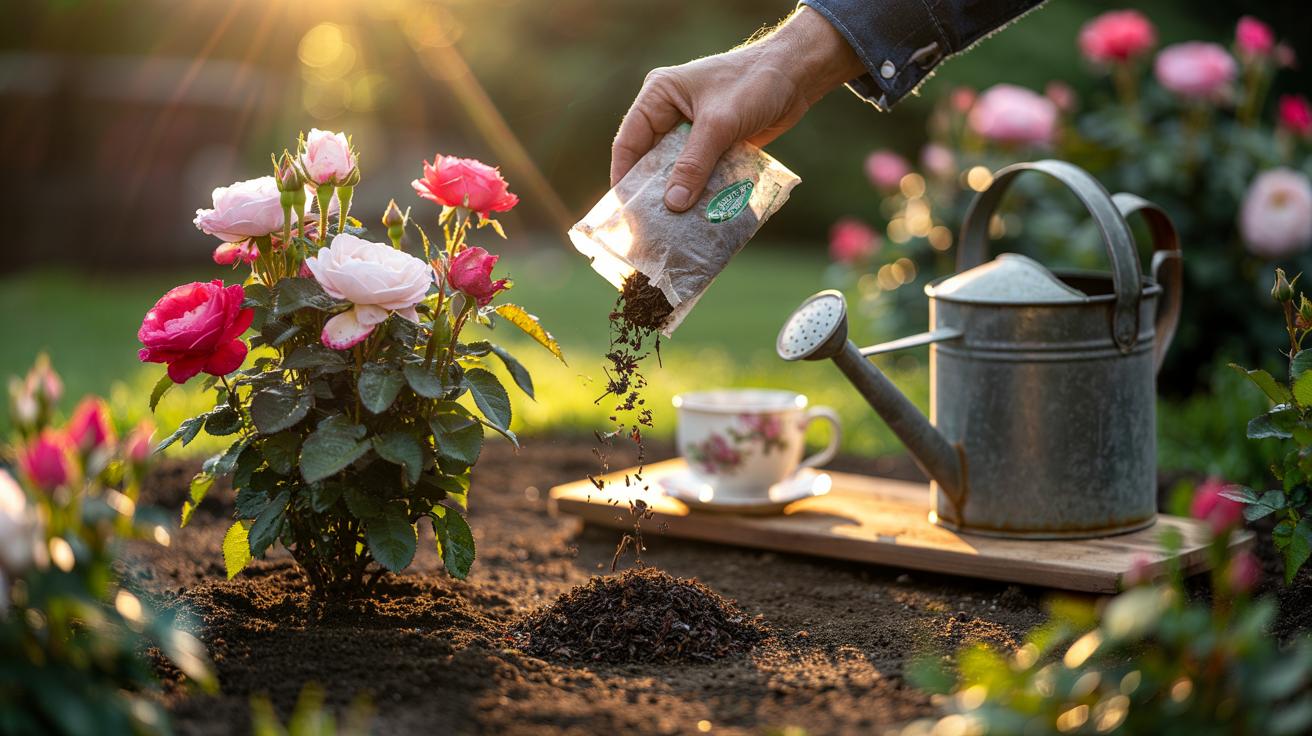
Cool the bag, then open it. Scatter the damp leaves in a ring at the dripline, avoiding the stem by 10–15 cm. Rake lightly into the top 2–3 cm of soil and cap with a whisper of mulch. Two to four bags’ worth per medium rose, once a week in active growth, is a sensible starting point. On hot, drying days, the fibres help keep moisture where roots can sip. On clay, they loosen texture; on sandy beds, they slow leaching. Never pile soggy leaves against the crown—rot loves a damp collar. Small steps. Quick results. Stronger roses.
Prefer to water it in? Use “tea water”: dilute leftover tea at roughly 1:10 with fresh water and apply to already moist soil to avoid shock. Skip milk and sugar, of course. Foliar spraying is unnecessary; the goodness belongs at the roots. Composting is another route: add tea leaves to your heap with dry browns to avoid matting, then top-dress with the finished compost in spring. Check bag materials: many modern sachets contain plastic mesh. Do not bury polypropylene or nylon bags—empty them and bin the casing. Paper-only bags and loose-leaf are easiest to repurpose cleanly.
Choosing the Right Tea and Timing
Most traditional teas work, but some shine. Black and green teas deliver gentle nitrogen and acidity; rooibos is naturally low in caffeine; chamomile leaves are prized by some for their soothing effect on seedlings nearby. Avoid flavoured blends heavy with oils, and keep anything sweetened out of the border—ants and wasps will thank you. Timing matters just as much as type. Feed during flushes: early spring as shoots surge, after each deadheading cycle, and lightly in early autumn to support late colour without forcing soft growth before frost. Morning or evening is best, ideally after a thorough watering or steady rain.
| Tea Type | Main Compounds | pH Effect | Suggested Use | Caution |
|---|---|---|---|---|
| Black tea | N, K, tannins | Mildly acidifying | Soil sprinkle, compost | Empty plastic sachets |
| Green tea | N, polyphenols | Mildly acidifying | Tea water, mulch blend | Don’t overdo on alkaline soils |
| Herbal (rooibos/chamomile) | Organic matter, micronutrients | Neutral to slight acid | Compost, light top-dress | Avoid blends with oils |
Coordinate with your wider programme. Pair tea-leaf dressings with a slow-release, balanced rose fertiliser in spring and a potassium-forward feed before peak bloom. Think synergy, not substitution. On very alkaline soils, tea’s gentle acidity can help micronutrient uptake; on already acidic beds, use sparingly and test pH yearly. Watch for matting in wet spells; mix leaves with bark fines to keep air moving. As temperatures climb, feed in the cool of the day to avoid scorching and to lock in moisture before the heat sets in.
Turn your daily brew into a quiet force in the border: a waste-to-wonder habit that supports microbes, steadies moisture, and coaxes richer colour from hungry roses. It’s low-cost, low-risk, and oddly satisfying—especially when paired with sharp pruning, steady watering, and a balanced feed. The trick is restraint and rhythm. A handful here, a rinse there, and an eye on the weather forecast. Ready to trial it for a fortnight, keep notes, and see whether your roses respond with tighter buds and longer-lasting blooms—then refine your routine accordingly?
Did you like it?4.7/5 (20)