In a nutshell
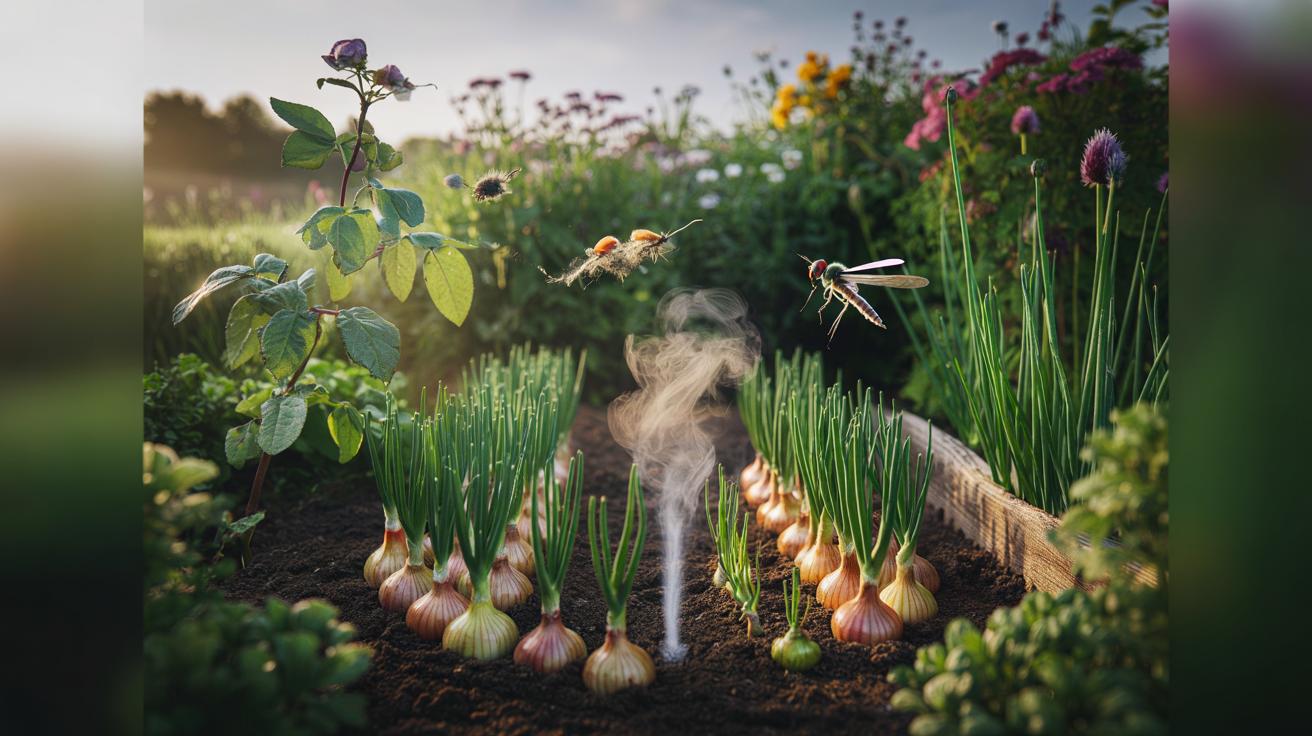
- 🌱 Onions repel aphids by masking host-plant scents, disrupting landing and feeding without toxins, reducing honeydew, leaf curl, and sooty mould.
- 🧪 The allium chemistry—notably volatile organosulphur compounds—creates an odour cloud that confuses winged aphids and buys time for natural predators.
- 🛠️ Practical methods: interplant onion sets, use bruised skins as a light mulch, and apply a simple onion spray (onions + water + mild soap) in the evening; reapply after rain.
- 🤝 Boost results with companion planting—chives, ornamental alliums, and trap crops like nasturtiums—while encouraging beneficial insects such as ladybirds and hoverflies.
- ⚠️ Safe but not a silver bullet: onions deter rather than kill; combine with water jets or soap sprays, rotate alliums, avoid broad-spectrum insecticides, and time applications at dusk.
On the British allotment scene and in cottage gardens alike, a simple kitchen bulb is doing quiet, effective work. The humble onion can repel aphids without harsh chemistry, keeping tender growth clean and vigorous through spring flushes and summer peaks. Its power lies in scent, not toxicity. This makes onion-based tactics a safe choice around children, pets, and pollinators when used with care. By masking plant odours and jamming the insects’ senses, onions interrupt the first step of infestation: landing. The result is fewer curled leaves, less sticky honeydew, reduced moulds, and a more resilient patch. Let’s unpack the science, the methods, and the limits.
How Onion Chemistry Confuses Aphids
Aphids don’t browse at random; they navigate by smell. They home in on volatile cocktails released by soft new growth, then probe with needle-like mouths. Enter the allium arsenal. When onions are bruised or cut, enzymes convert S-alk(en)yl-L-cysteine sulfoxides into sharp organosulphur compounds and the famous lachrymatory factor. These volatile molecules spread quickly, create a pungent “odour cloud”, and can obscure the subtle green-leaf volatiles that guide sap-feeders. Change the air, change the behaviour. That’s the essence of onion-based deterrence.
Studies on alliums show this masking effect can lower landing rates of winged aphids, especially in light breezes that carry the onion’s scent across a bed. It’s not a poison; it’s misdirection. The insects spend longer “deciding”, drain their limited energy, and often settle elsewhere. In mixed plantings, that delay matters. It buys time for ladybirds, lacewings, and hoverflies to patrol, and it prevents colonies from tipping into explosive growth. You’ll still spot scouts. But fewer arrivals means fewer nymphs, less honeydew, and fewer sooty moulds colonising leaves. Onions help keep the balance in your favour—subtly, constantly.
Practical Ways to Use Onions as Natural Repellents
Start with placement. Thread onion sets through borders, or ring prized hosts—roses, beans, broad beans, brassicas—with a low allium “hedge”. Spacing of 10–15 cm lets the scent blanket foliage without crowding. For a quicker hit, bruise a few outer skins and scatter them as a light mulch beneath vulnerable plants; refresh after rain. In a hurry? Make an onion spray: blend two medium onions with one litre of water, steep 8–12 hours, strain, and add a whisper of mild soap for cling. Spray in the cool of evening, targeting the undersides of leaves. Reapply after rain or twice weekly during aphid flights. Always patch-test a leaf first on heat-stressed plants.
| Method | How to Use | Frequency | Notes |
|---|---|---|---|
| Interplanting | Plant onions around susceptible crops | Season-long | Odour field grows with foliage |
| Bruised Skins | Scatter crushed peels as mulch | Refresh weekly | Uses kitchen waste; rain weakens effect |
| Onion Spray | Steeped onion water with a drop of soap | 2x weekly | Refrigerate; use within 3–4 days |
Keep it light. You’re aiming to cloak, not drench. Excess spray can spot delicate leaves under strong sun. Combine with physical tactics—a brisk jet of water knocks down colonies and exposes survivors to the onion’s mask. In containers, a half ring of spring onions gives neat structure and steady repellent scent without stealing too much root space.
Companion Planting and Rotation with Alliums
Companion planting strengthens the onion effect. Pair onions with roses to reduce greenfly pressure, or flank brassicas to confuse cabbage aphids while the bulbs guard against slugs by keeping soil edges airy. Many gardeners alternate rows of onions and carrots, a classic swap that tempers both carrot fly and sap-feeders. For aphids, the trick is adjacency. Let the onion’s odour drift across your target foliage as a constant, low-level shield.
Diversity multiplies benefits. Thread in flowering chives or ornamental alliums to feed hoverflies and parasitic wasps; their larvae hoover up aphids by the hundred. Add a trap crop such as nasturtiums a short distance away. Aphids gather there first and can be washed off or cut back, while onions blur the cues around your key crops. Mind spacing: 10–15 cm between onion bulbs, 25–30 cm between onion rings and host plants to avoid root competition in lean soils.
Rotate alliums yearly across beds. This reduces build-up of onion fly and fungal issues, keeping your biological shield healthy. In richer soils, onions are light feeders, so they slot neatly before hungrier fruiting crops. In containers, plant dwarf onions at the pot’s rim and a central crop—peppers, aubergines—inside the ring. The aim is a living perimeter that speaks “not worth landing here” to passing aphids.
Safety, Evidence, and Limits of the Onion Approach
Onion-based deterrence is low risk when handled sensibly. The volatiles evaporate quickly, leaving minimal residue on edibles; wash and you’re done. Note that large ingestion of onions is harmful to cats and dogs, but garden use as a light spray or interplanting poses little hazard if pets aren’t eating the bulbs. Think aroma, not armour. It’s a behavioural nudge, not a broad-spectrum biocide.
Evidence spans small trials and long allotment experience: mixed allium borders reduce early aphid landings and slow colony formation. That said, onions won’t topple a thriving infestation on their own. For outbreaks, combine with a targeted soap spray, a sharp water jet, and the release or protection of beneficial insects. Avoid heavy synthetic pyrethroids that wipe out allies and create rebound flares. Apply onion sprays at dusk to spare pollinators, and skip hot, bright hours to prevent leaf scorch. If tender leaves show spotting, dilute, reduce soap, and retest.
Set expectations clearly. Onions deter, disrupt, and complement—they don’t exterminate. Used early and steadily, they keep pressure down so predators can keep up. Used late, they still help by reducing reinvasion after you’ve knocked colonies back. In short: a safe, cheap, kitchen-cupboard tactic that fits neatly inside integrated pest management.
In a season of changeable weather and unpredictable pest surges, the onion’s quiet chemistry offers a calm, repeatable defence. It’s easy to try, thrifty to maintain, and friendly to the wildlife that holds a garden together. Deploy bulbs, skins, and sprays as a gentle veil over your most vulnerable plants, then let ladybirds, lacewings, and good husbandry do the rest. Ready to test the aroma advantage on your own patch, and if so, which bed will you shield first—and how will you measure the difference?
Did you like it?4.5/5 (27)