In a nutshell
- 🧅 Onion water works as a repellent, not a killer, using volatile organosulfur compounds to confuse pests’ scent cues and reduce feeding without harsh chemicals.
- 🔧 Simple method: blend/steep one onion per litre, strain, dilute 1:3 for foliar spray, add a drop of surfactant, and apply in cool hours after a spot test.
- 🐛 Best against aphids, whiteflies, thrips, spider mites, and fungus gnats; spray leaf undersides and use soil drenches sparingly; minimal impact on pollinators when avoiding open blooms at dusk.
- ⏳ Limitations: effects are short-lived and not rainfast; overly strong mixes can scorch tender plants—dilute sensibly, avoid midday sun, and repeat every 3–5 days during outbreaks.
- 🧩 Fit it into Integrated Pest Management (IPM): combine with fine mesh, sticky traps, intercropping, and rotations with neem or soap—plus strong plant health for lasting resilience.
Garden pests don’t read seed catalogues; they turn up hungry and uninvited. That’s why so many UK growers, from balcony beginners to seasoned allotmenteers, swear by a humble kitchen fix: onion water. It’s cheap, fast to make, and, when used correctly, surprisingly effective at discouraging soft-bodied sap-suckers that disfigure leaves and sap plant vigour. The trick isn’t magic; it’s chemistry and smell. Used as a repellent rather than a killer, onion water pushes pests away while your plants recover. Below, you’ll find the science, a rigorous how-to, and pragmatic tips on pairing this method with other tactics to keep bugs at bay without drenching your plot in synthetics.
The Science Behind Onion Water’s Repellent Power
Onions are loaded with organosulfur compounds that volatilise rapidly. When you crush, blend, or steep them, you release thiosulfinates and related sulfurous molecules that deliver the unmistakable onion odour. Many garden pests navigate by scent, honing in on stress volatiles or the specific bouquet of their favourite hosts. Onion water muddies those signals, disrupting host-finding and feeding. Think of it as olfactory camouflage: strong, short-lived, and remarkably irritating to small invaders with delicate antennae and mouthparts.
There’s more at play than smell. Onion extracts show mild antimicrobial activity, which can help suppress sooty mould growth that often follows heavy aphid or whitefly honeydew. The solution’s faint acidity and phenolics add another friction point for pests. None of this turns onion water into a silver bullet. It is a repellent and, to a lesser extent, a conditioner for leaf surfaces, not a systemic insecticide. Expect fewer pests lingering and feeding, not a mass die-off.
Crucially, the effect is transient. Sunlight and wind strip volatile compounds quickly. That’s why timing matters, as does repeat application. Use it to buy your plants breathing space while you strengthen them with good watering, balanced nutrition, and vigilant monitoring.
How to Make and Use Onion Water Safely
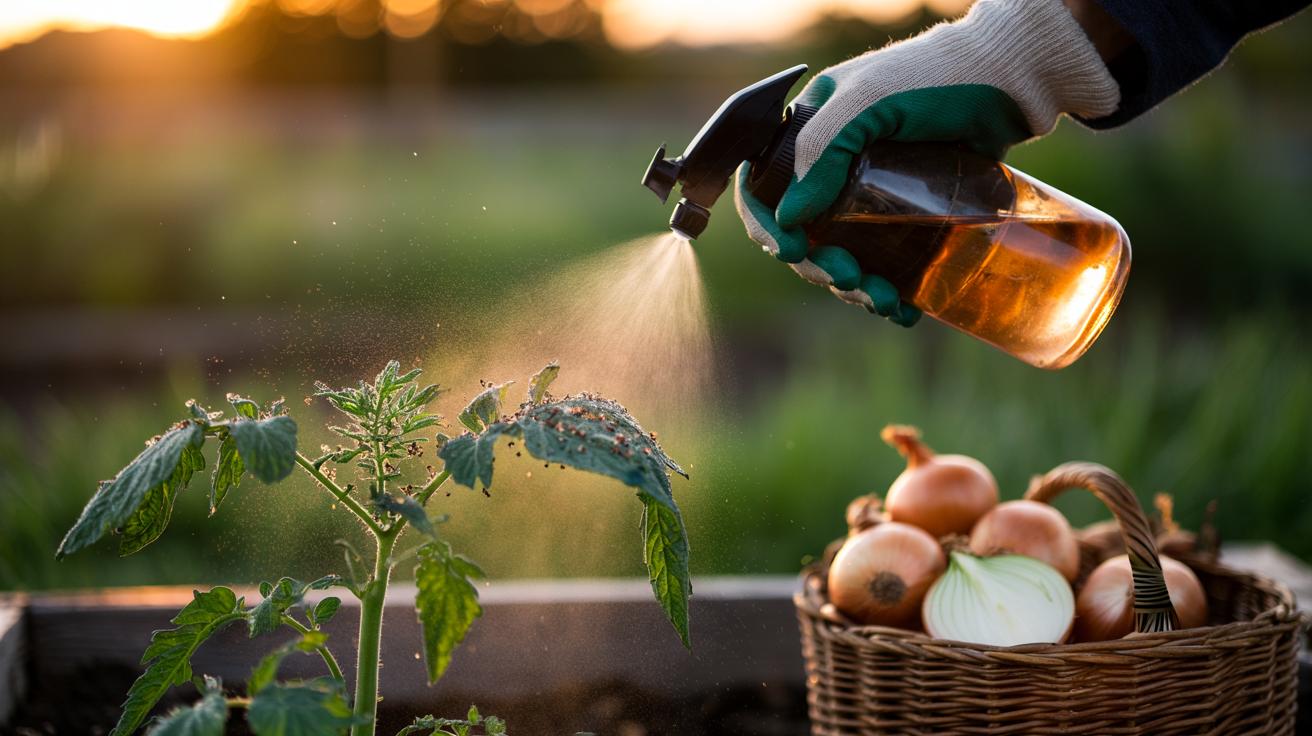
For a dependable batch, start with one large onion (about 150–200 g) per litre of water. Chop it, blend with half the water, then add the rest and steep 12–24 hours. Strain well through muslin or a coffee filter; clogged sprayers are the bane of foliar treatments. For a foliar spray, dilute the strained concentrate 1:3 (one part onion water to three parts clean water). For a soil drench targeting fungus gnat larvae, 1:1 is acceptable, used sparingly around the root zone.
Add one or two drops of biodegradable washing-up liquid per litre as a surfactant so droplets spread and stick. Spray in the cool of the evening or early morning to reduce odour impact and prevent leaf scorch. Never spray in full sun or during heatwaves. Begin with a small test on a few leaves and wait 24 hours. If there’s no yellowing or burn, proceed across the plant, coating leaf undersides where pests congregate.
Apply every 3–5 days during active infestations, then weekly as a deterrent while populations subside. Store concentrate in the fridge for up to 72 hours; potency fades after that. Label the bottle clearly. It smells powerful, and yes, it lingers—so warn housemates and neighbours before you treat greenhouse crops.
What Pests It Helps Against
Onion water shines against soft-bodied sap-suckers and small, delicate feeders that hate strong volatiles. Expect obvious benefits with aphids, whiteflies, thrips, and spider mites on tomatoes, peppers, brassicas, cucurbits, and ornamentals. It also helps discourage adult fungus gnats in potting mixes and can make foliage less attractive to flea beetles. For chewing caterpillars like cabbage whites, deterrence is partial at best; pair onion water with netting or hand-picking. It’s a push-back tool, not a cure-all.
| Pest | Typical Symptom | How to Apply | Notes |
|---|---|---|---|
| Aphids | Sticky honeydew, curled leaves | Foliar spray, underside focus | Repeat every 3 days initially |
| Whiteflies | Clouds on disturbance, leaf yellowing | Foliar spray + yellow traps | Alternate with soap sprays |
| Thrips | Silvery streaks, distorted buds | Fine mist, thorough coverage | Combine with blue traps |
| Spider mites | Speckling, fine webbing | Spray both sides of leaves | Raise humidity briefly |
| Fungus gnats | Adults near compost, weak seedlings | Soil drench, top 2 cm | Let surface dry between waterings |
Does it bother pollinators? Minimal, if used correctly. Spray at dusk, avoid open blooms, and keep to targeted foliage. By morning, much of the odour has dissipated, leaving bees to work unbothered.
Limitations, Garden-Friendly Practices, and Pairings
Onion water sits neatly inside Integrated Pest Management (IPM). It reduces pressure while you deploy longer-term fixes. Intercrop with alliums, calendula, or nasturtiums to distract and shelter beneficials; use fine mesh netting on brassicas and a regular blast from the hose to dislodge early colonies. Catch problems early and you’ll need fewer sprays of any kind. Sticky traps help you count pests objectively, telling you when to escalate or ease off.
There are caveats. Overly strong solutions can mark tender seedlings, herbs like basil, or heat-stressed plants. Keep your dilution sensible and always spot-test. Onion water isn’t rainfast, so showers erase your work—schedule treatments after the rain, not before. Smell-sensitive neighbours? Communicate and spray at night, especially in dense terraces. In greenhouses, boost airflow after spraying to prevent lingering odour and reduce leaf wetness.
For resilience, pair onion water with neem, insecticidal soap, or homemade garlic-chilli sprays, rotating weekly to avoid pest habituation. Feed plants well—balanced nutrition toughens cell walls and makes leaves a less enticing meal. Healthy soil, happy roots, fewer pests. That’s the quiet equation behind every thriving plot.
Onion water won’t replace every bottle in your shed, yet it’s a fierce little ally—cheap, fast, and kinder to the living web that keeps a garden humming. Use it to push pests back while you strengthen plant health and diversify controls. Small, consistent actions beat emergency rescues. Ready to try a batch, map a schedule, and track results across a fortnight—then refine your approach based on what your own beds and borders are telling you?
Did you like it?4.3/5 (22)