In a nutshell
- 🧼 Use baking soda (sodium bicarbonate) for its mildly alkaline, gentle abrasive and deodorising action that disrupts biofilm and lifts bathroom mould without harsh fumes.
- 🧪 Step-by-step method: mix a 3:1 soda-to-water paste, apply 15–30 minutes, optionally add a vinegar mist to fizz, then scrub, rinse and dry; never mix with bleach.
- 🧱 For stubborn stains, pair baking soda with 3% hydrogen peroxide on grout (patch test first) and replace degraded silicone if deeply stained; ventilate well during cleaning.
- 🌬️ Prevention: run the extractor 20 minutes after showers, squeegee and dry seals, fix leaks and reseal edges, and apply grout sealer annually; do a brief weekly soda refresh.
- 💷 Benefits: a low-odour, low-cost, family-friendly approach that works on tiles, grout and seals, focusing on residue removal for longer-lasting cleanliness.
Few bathroom problems feel as stubborn as black mould creeping along grout and silicone. Yet the fix might already be in your cupboard. Bicarbonate of soda—better known as baking soda—works as a gentle scourer, odour absorber, and pH shifter, making it a remarkably effective ally against mildew. It’s inexpensive, low-tox, and easy to apply. No harsh fumes. No ruined towels. Used correctly, it lifts the biofilm that mould clings to and helps keep moisture-prone corners fresher for longer. That’s the quiet power of a pantry staple doing the job many pricey sprays only promise. Here’s how to put the white powder to work, safely and thoroughly, in a British bathroom.
Why Baking Soda Stops Bathroom Mould
Mould establishes itself in damp, slightly acidic films on tile, grout and sealant. Baking soda (sodium bicarbonate) has a mildly alkaline pH and a fine, crystalline texture. That pairing matters. The alkalinity helps disrupt the surface environment mould favours, while the gentle abrasiveness breaks up the biofilm so spores lose their foothold. It’s not a blunt instrument like bleach; it’s a targeted clean that preserves the finish on ceramic, enamel and most plastics. Crucially, it also deodorises, neutralising the musty notes that signal microbial growth.
There’s chemistry at play. As a buffer, bicarbonate steadies pH as you scrub, making it forgiving on household surfaces while still nudging conditions away from mould’s comfort zone. Pairing the powder with a light mist of white vinegar—used sequentially, not mixed into the paste—creates fizz that mechanically loosens grime, helping lift it from porous grout lines. Bleach may whiten stains but often leaves the underlying film intact, allowing regrowth. Baking soda, by contrast, focuses on removal and residue control, the essentials of lasting cleanliness.
Safety and practicality seal the deal. It’s food-safe, economical, and compatible with daily cleaning rhythms. No special gear. Minimal risk to pets or children once rinsed. For bathrooms with limited ventilation, it’s a pragmatic, low-odour strategy that still yields professional-looking results.
Step-By-Step Method: Mix, Apply, Wait, Rinse
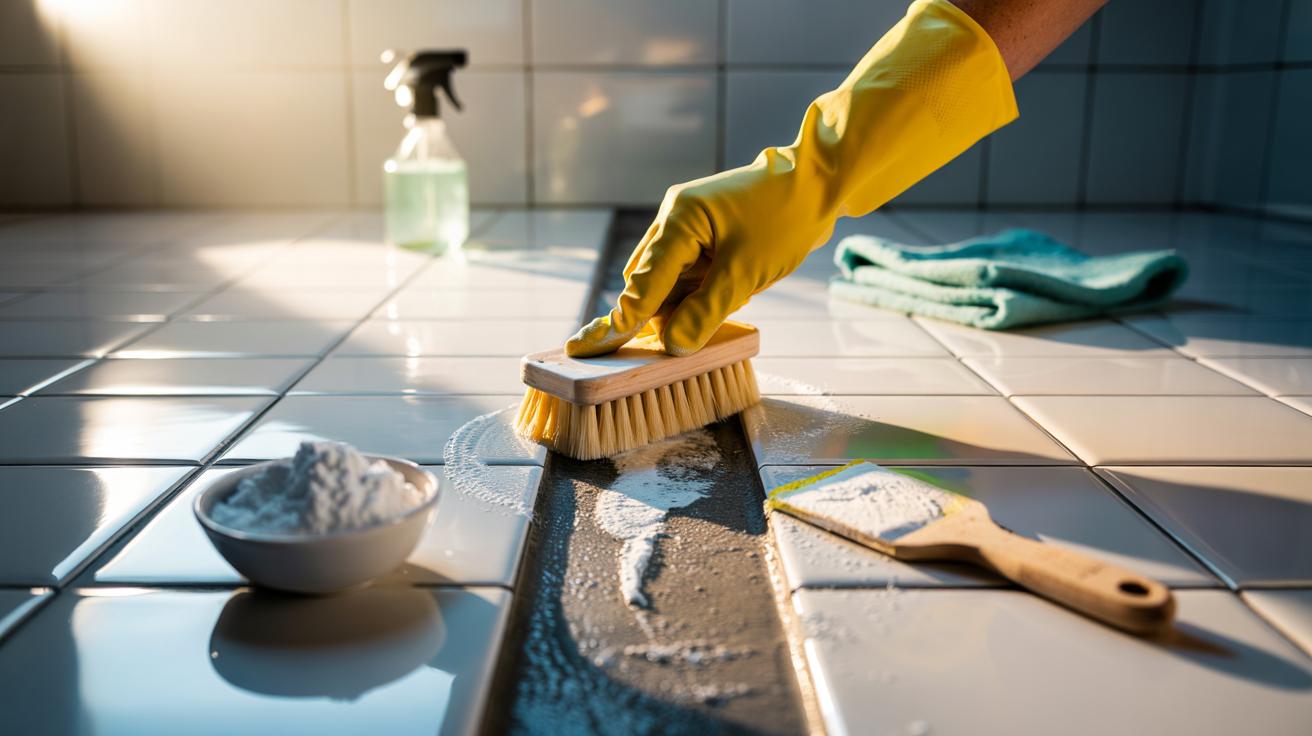
Start simple. Make a paste: three parts baking soda to one part water. Thick enough to cling, not drip. Scoop it onto grout lines, silicone edges, tile corners—anywhere you spot specks or shadows. Press it in with a soft brush or gloved fingers. Leave for 15–30 minutes so the alkalinity and abrasiveness can work. For tough patches, lightly mist the paste with white vinegar after the first 10 minutes; let it fizz, then gently scrub in circles. Never mix bicarbonate directly with bleach—this is unsafe and unnecessary.
Scrub time. Use a soft toothbrush on grout, a non-scratch pad on tiles, and a cotton bud along taps and seals. Work methodically from top to bottom so loosened residue doesn’t re-soil cleaned areas. Rinse with warm water. Wipe dry with a microfibre cloth to remove lingering film. Always dry surfaces after cleaning; moisture invites mould back within days. If stains persist, repeat once more rather than scrubbing aggressively; the second pass often lifts what the first softened.
| Surface | Soda Mix | Optional Boost | Contact Time | Scrub Tool |
|---|---|---|---|---|
| Grout (light) | 3:1 soda:water paste | Mist of vinegar | 20–30 mins | Soft toothbrush |
| Silicone sealant | Thicker paste | None or gentle vinegar mist | 15–20 mins | Cotton bud/soft brush |
| Ceramic tiles | 2:1 paste or damp sprinkle | Vinegar mist for fizz | 10–15 mins | Non-scratch pad |
Finish by ventilating the room—window open, fan on—until all surfaces are dry to the touch. A final wipe with a dry cloth reduces water spots and slows the return of that tell-tale musty smell.
Persistent Mildew, Grout Stains, and Prevention
Some marks are etched rather than fresh. For stubborn grout shadows, blend baking soda with a little 3% hydrogen peroxide to form a creamy paste, apply for 10–15 minutes, then scrub and rinse. This oxygen action can brighten white grout without the harshness of chlorine, but always perform a small test patch first, especially on coloured grout. If silicone is deeply stained or crumbling, replacement beats scrubbing; no cleaner can restore degraded sealant. When mould covers a large area or recurs rapidly, consider professional advice and check for hidden leaks.
Prevention is the quiet hero. Run the extractor fan during and for 20 minutes after showers. Squeegee glass and tiles. Keep a dry cloth handy for seals and ledges. Fix drips, reseal loose edges, and once surfaces are spotless, apply a penetrating grout sealer annually to reduce porosity. A weekly refresh—light sprinkle of soda, quick brush, warm rinse—keeps biofilm at bay so major cleans become rare. Moisture control beats any cleaner, every time.
For renters and homeowners alike, the strategy is simple: remove film, reduce damp, repeat occasionally. The cost is pennies, the effort modest, the outcome visible. Your bathroom smells cleaner because it is cleaner.
Bicarbonate of soda won’t replace structural fixes, but it shines as a safe, smart first line of defence against bathroom mould and everyday mildew. It scrubs without scratching, balances pH without harsh fumes, and delivers results you can see on tiles, grout and seals. Build it into your weekly routine and the black specks that once spread quietly will struggle to return. Ready to swap expensive sprays for a cupboard staple and a steadier cleaning rhythm—what will you try first in your bathroom this week?
Did you like it?4.4/5 (28)