In a nutshell
- 🧪 Baking soda works by combining high absorbency with mild alkalinity, lifting soils to the surface and neutralising odours without bleaching.
- 🧼 Follow the overnight method: blot (don’t rub), lightly mist, sprinkle generously, leave 8–12 hours, then vacuum slowly from multiple directions.
- 🍷 Tailor to the mess: wine/coffee respond to a weak vinegar pre-spray on synthetics, grease needs immediate powder, pet urine benefits from weighted contact, and mud should dry before treatment.
- ⚠️ Mind carpet types and safety: synthetics tolerate the process, wool needs minimal moisture and no heat, plant fibres like sisal avoid water; never mix with chlorinated or ammonia products.
- 🧰 Know the limits: for large areas, dye bleed, or lingering smells, call a professional; between visits, bicarbonate of soda is a dependable first responder.
Spills happen. Tea over a cream runner, red wine on a rented flat’s beige pile, or a puppy’s first mistake on the landing. You don’t need a cupboard full of specialist products to rescue the fibres by morning. A box of baking soda—yes, humble sodium bicarbonate—can lift stains and neutralise odours overnight, often with less effort and less cost than branded sprays. The trick is understanding why it works and how to deploy it deliberately. This guide unpacks the chemistry, the method, and the nuance for different stains and carpet types, so you wake to a cleaner, fresher floor and a sense of domestic calm.
Why Baking Soda Works on Carpet Stains
Baking soda is both an absorbent powder and a mild alkali. Those two properties do the heavy lifting. As an absorbent, it wicks moisture and dissolved soils up from the backing and into the powder, reducing the “dark ring” that can reappear after a quick clean. As an alkali, it gently shifts pH, helping to loosen acidic residues—think coffee, wine, or juice—without the harshness of strong chemicals. It also reacts with acids to release carbon dioxide, a microscopic fizz that can disrupt sticky bonds in dried spills.
Odour is tackled too. The bicarbonate ion latches onto volatile acids that make smells stubborn, leaving the area neutral rather than perfumed. That matters for pet accidents where lingering scent triggers repeat marking. The beauty here is simplicity: a dry, safe powder that pulls grime out instead of pushing it deeper. It’s non-bleaching, non-chlorinated, and compatible with most household routines. Crucially, it keeps soil at the surface, ready for a thorough vacuum the next morning.
Step-By-Step: Overnight Method for Fresh and Set Spills
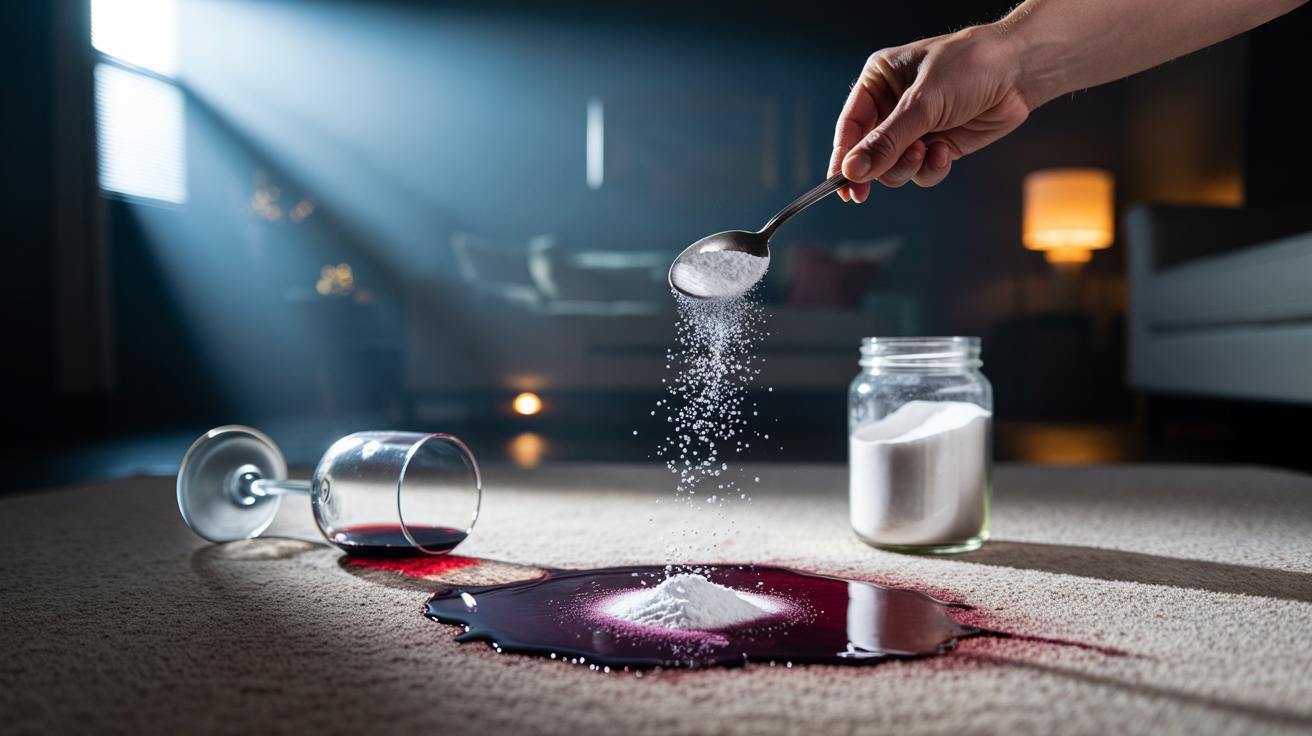
Act fast if you can. First, blot—don’t rub—using white cloth or kitchen towel to remove as much liquid as possible. If the stain is dry or tacky, lightly mist with cool water to rehydrate. You want it damp, not soaked. Sprinkle a generous layer of baking soda over the area, extending a centimetre or two beyond the visible stain to catch any wicking from below. For dense pile, gently work the powder in with fingertips or a soft brush. Leave it to sit overnight (8–12 hours), so capillary action and adsorption can do the job while you sleep.
In the morning, vacuum thoroughly, making multiple slow passes from different directions. Inspect. If a shadow remains, repeat the process or spot-clean with a little water and a cloth, then reapply powder. Resist the urge to flood the patch; too much liquid drives soils deeper and risks browning on natural fibres. For odour-heavy spots, lay a dry towel weighted with a book over the powder during the night to increase contact and draw. Finish with a final vacuum to remove residues that could attract fresh dirt.
Tailoring the Technique for Common Stains
Not all messes behave alike. For wine and coffee, blot, mist with cool water, then apply powder; an optional 1:4 white vinegar to water pre-spray helps with tannins on synthetic carpets. Skip vinegar on wool unless you’ve patch-tested. For grease—curries, gravies, cosmetics—gently scrape excess, sprinkle baking soda immediately, and leave longer; the powder’s absorbency handles lipids well. Urine requires odour control: blot heavily, mist, apply powder thickly, and allow a full overnight. Mud? Let dry, vacuum, then treat the faint remaining mark with the overnight method.
Always test in an inconspicuous corner first. Dyes and protectants vary, particularly in rental or high-traffic spaces with prior treatments. Where the spill contains artificial colours—sports drinks, felt-tip pens—speed is vital before pigments bind. In stubborn cases, a second cycle plus a gentle rinse with cool water can tip the balance without resorting to harsh chemistry. Remember: baking soda is a patient cleaner. Time does the work. You just set the stage, keep moisture in check, and vacuum meticulously at the end.
| Stain | First Aid | Optional Add-On | Overnight Dwell Time |
|---|---|---|---|
| Red Wine / Coffee | Blot, light mist | Weak vinegar pre-spray (synthetics) | 8–12 hours |
| Grease / Oil | Scrape, apply powder immediately | Second application in morning | 12 hours+ |
| Pet Urine | Heavy blot, mist | Weight with towel for contact | 8–12 hours |
| Mud / Dirt | Let dry, vacuum | Repeat cycle if shadow remains | 8–10 hours |
Safety, Carpet Types, and When to Call the Pros
Most synthetic carpets (nylon, polyester, polypropylene) tolerate this method beautifully. Wool is more sensitive to pH and oversaturation; keep moisture minimal and avoid hot water. Plant fibres like sisal or seagrass dislike water entirely, so stick to dry powder application and cautious blotting only. Vacuum thoroughly to remove fine residue that might dull fibres or attract new soil. Avoid mixing baking soda with anything chlorinated or ammonia-based; while the powder itself is mild, poor chemical cocktails aren’t worth the risk. If you’ve got a manufacturer warranty, check care guidelines before introducing any additive such as vinegar.
How do you know it’s time for help? If a stain covers a large area, if there’s dye migration, or if odour returns after two cycles, consult a professional cleaner with fibre-specific training. They can flush the backing and pad with controlled extraction, then rebalance pH. Between visits, your box of bicarbonate of soda remains the dependable first responder: cheap, gentle, effective, and readily available in every supermarket aisle.
Used smartly, baking soda turns long nights into quiet cleaning shifts, leaving you with fresh fibres by breakfast and a home that smells like nothing at all—exactly as it should. The method relies on patience, light moisture, and a meticulous vacuum to finish the job. For most household spills, that’s all you need. Where the mess is complex, you adapt and repeat. Where it’s dangerous to over-wet, you go drier and slower. What stubborn spot will you put to the test tonight, and how will you tweak the process to suit your carpet’s character?
Did you like it?4.4/5 (22)