In a nutshell
- 🧠 Rubber bands create an instant buffer: their elasticity and high friction reduce micro-slips and spread impact, acting as a “sacrificial skin” that prevents scratches and scuffs
- 🪑 Quick wins at home: wrap bands on chair legs, under vases/lamps on glass, around bookends and plant pots, or on chopping boards—wrap, test, adjust for fast, discreet protection
- 📏 Choose the right size and material: 3–6 mm for light items, 10–12 mm for heavier; pick durable silicone for heat/sun, ensure a snug fit, and layer thin bands rather than overstretching
- 🧼 Maintain and stay safe: test on delicate finishes, avoid dyed bands on pale surfaces, clean to remove grit, replace when whitening, and use bands to complement (not replace) felt pads for heavy pieces
- 💡 Everyday advantages: low-cost, reversible, and subtle, rubber band buffers protect surfaces, steady items, and save on repairs—ideal for renters, families, and anyone guarding treasured furniture
Scratches appear in a heartbeat. A chair nudges the skirting. A vase shifts on a glass top. Then you spot the damage and wince. Here’s a quick, clever fix hiding in your stationery drawer: rubber bands. Loop them strategically and you create a thin, grippy buffer that stops scuffs before they start. It costs pennies, takes seconds, and doesn’t need tools. Instant protection, minimal faff. Whether you rent, have restored antiques, or simply want to keep a new sideboard pristine, this soft shield curbs movement, absorbs shocks, and saves you from costly repairs. Think of it as a DIY gasket for your furniture that cuts scratches down to size—fast, neat, effective.
Why Rubber Bands Work as Surface Shields
Rubber is a small miracle of materials science. Its elasticity lets it compress under load, spreading impact and reducing the sharp point of contact that causes gouges. At the same time, rubber’s naturally high friction grips both surfaces, limiting micro-slips that grind grit into finishes. That combination—cushion plus control—creates an instant barrier, particularly useful on slick glass, polished timber, and metal frames. The band becomes a sacrificial skin that takes the wear so your furniture doesn’t. Even one loop under a lamp base can tame vibrations from footsteps or a closing door, curbing the slow creep that leaves tell-tale arcs and hairline scratches.
There’s also a behavioural tweak at play. A visible rubber band around a chair leg acts as a subtle prompt: you move the chair a touch more carefully. On tiled floors or laminate, two or three bands spaced a centimetre apart create a stable, non-marking ring. The result isn’t industrial or invasive—just enough to hold position and quell harsh edges. Still, keep dust at bay; trapped grit will defeat any buffer. A quick wipe of the band and the resting surface helps the protection perform as promised.
Instant Applications Around the Home
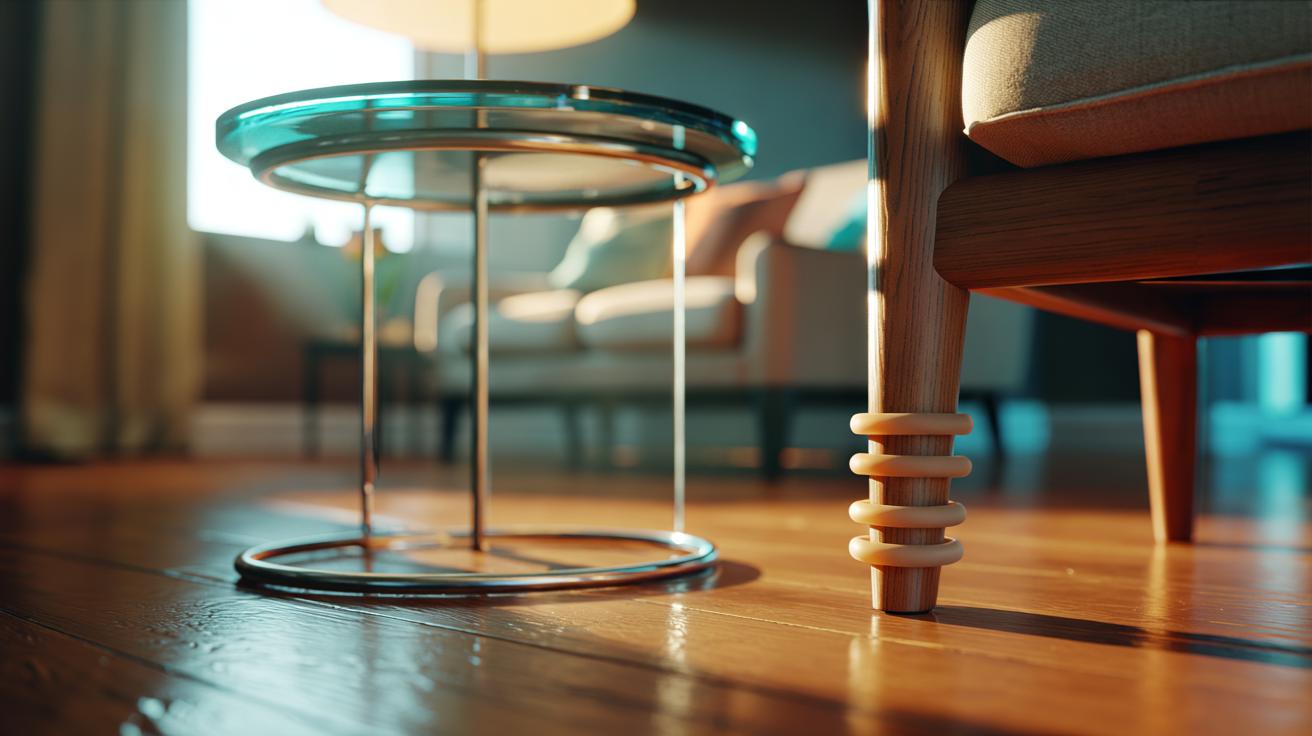
Start with chairs. Slip a rubber band around each leg, two loops stacked near the tip. The grippy ring dampens impact and softens contact with skirting or table legs. On dining tables, loop a band around a vase or lamp base; the band’s edge lifts the object fractions of a millimetre and stops that slow swivel that etches circles into varnish. Wrap, test, adjust; that’s it. For bookends, bands prevent slide and save lacquered shelves from pressure dents. Picture frames? Loop one along the bottom rail before leaning a frame on a mantel, and watch the slipping stop.
Kitchens benefit quickly. A broad band around a chopping board corners your board into place without sticky pads. It’s washable, replaceable, and keeps granite or wooden counters from faint scrape lines. Pop a band around plant pots before placing them on window sills; moisture stays put, the pot won’t skate, and glazing stays safe. In bedrooms, wrap thin bands around metal clothes-hanger shoulders to avoid snags against delicate wardrobe interiors. Even a speaker on a glass shelf behaves better with a slender rubber gasket. Small loop, big effect. The principle is identical: add a soft, high-friction interface and reduce both slide and bite.
Choosing Sizes, Materials, and Fit
Match the band to the job. Narrow bands (around 3–6 mm) suit light pieces such as photo frames, while wider bands (10–12 mm) cushion heavier items like planters or solid wood lamps. Latex bands are ubiquitous and cheap, but silicone bands excel on heat-prone or sunlit spots because they resist perishing. If you’re worried about colour transfer, pick neutral or white silicone. For chair legs, measure circumference; a band should sit snug without straining. Aim for mild compression—tight enough to hold, never so tight that it leaves a permanent groove in softer timber.
| Item | Scratch Risk | Recommended Band | Fitting Tip |
|---|---|---|---|
| Chair legs | Medium–High | 10–12 mm latex or silicone | Two bands, spaced 8–12 mm apart |
| Vases/lamps on glass | High | 6–10 mm silicone | Single loop at the base perimeter |
| Bookends/speakers | Medium | 6–8 mm latex | One band per contact point |
| Plant pots | High | 10–12 mm silicone | Fit just above the base foot |
Not sure on size? Layer thinner bands rather than over-stretching one. Overstretching accelerates cracking and reduces the grip. If you see a band whitening or degrading, replace it. Fresh bands protect better and look tidier. For very heavy furniture, bands complement rather than replace felt pads; use bands to stop lateral movement, and pads to spread static load.
Care, Finish Compatibility, and Safety
Rubber is kind, but not magic. Test first on a hidden spot, especially with sensitive finishes like French polish or soft oiled oak; leave for 24 hours and check for imprinting or bloom. If you notice any tackiness or colour halo, switch to silicone or add a paper-thin barrier. On sunlit windowsills or radiators, plain latex can dry out; rotate or replace monthly. Clean bands with mild soap and water to purge grit that might scratch. When placing bands on cylindrical legs, avoid seams or sharp edges that can pinch and mark.
Households with children or pets should treat bands as consumables and store spares safely; they’re a choking hazard when snapped. Avoid dyed bands on pale leathers or painted metal; opt for neutral tones. Don’t rely on bands for tall, top-heavy items that require anchoring—use proper fixings. And if the look bothers you, tuck a band just above a leg’s foot or choose translucent silicone for a discreet line. The aim is practical protection without shouting about it. Invisible insurance, right where it counts. With quick checks and light maintenance, this tiny intervention keeps surfaces spotless far beyond its size.
A handful of rubber bands won’t replace museum-grade conservation, but they provide agile, everyday defence against scuffs and slips. They’re frugal, reversible, and brilliantly adaptable—from renters guarding deposits to families shielding heirlooms. The trick is thoughtful placement, sensible sizing, and a minute of testing. Quick fit today, fewer repairs tomorrow. As you look around your home—chairs, planters, lamps, frames—which surfaces could use a soft buffer right now, and where might this simple hack save you the next maddening scratch?
Did you like it?4.7/5 (27)