In a nutshell
- ⏱️ The 2-minute salt clean uses salt’s micro‑abrasive and hygroscopic action on a warm pan to lift grease fast while protecting finishes and seasoning.
- 🧂 Match method to pan: coarse salt for cast iron and stainless, fine salt for non-stick; add a touch of oil or lemon and choose gentle tools (towel, potato, cork, soft sponge).
- 🛠️ Step-by-step: pour off fat, warm 30–40s, scatter 1–2 tbsp salt, scrub in tight circles for 60–90s, discard dirty salt, rinse hot, dry; re‑oil cast iron to finish.
- ⚠️ Safety first: avoid scorching-hot pans, don’t dump hot salty slurry down the sink, rinse aluminium promptly; for enamel and fragile non-stick, go light—escalate method, not force.
- ♻️ Big wins: no harsh chemicals, quicker clean-up, preserved seasoning, less detergent use, and easy prevention with a rapid fine‑salt wipe after cooking.
Pan caked in sticky fat after Sunday roast? There’s a quick fix hiding in your cupboard. Using plain table or rock salt, you can lift stubborn residue fast, reducing scrubbing time and protecting your cookware. The trick relies on two simple properties: grit and absorption. Salt scours without harsh chemicals, and it pulls oil away from metal. Add a splash of heat and the right motion, and you’ll see results fast. In typical cases, two minutes of targeted cleaning is enough to restore a pan’s sheen. Here’s how to do it safely, when to switch tactics, and which salt works best.
Why Salt Works in Two Minutes
Salt is a mild, mechanical cleaner. The crystals act as a micro-abrasive, cutting through softened residues without gouging most finishes. At the same time, salt is hygroscopic, so it helps pull liquid fat and moisture away from the surface. Warmth is your ally: a lightly heated pan thins the grease, so the salt granules can slide underneath and shear it off. Think of it as controlled friction with a built‑in oil magnet. Unlike scouring powders, plain salt contains no surfactants or bleaches, making it a smart option for seasoned cast iron and robust stainless steel.
Chemically, salt stays inert during the quick clean, so it won’t strip cast iron seasoning the way strong detergents can. On stainless, the grit lifts browned bits without dulling the finish when used briefly. For non-stick, caution is crucial: some coatings scratch easily. That’s why the method changes slightly by pan type. Use coarse salt and a firm scrub on metal, but gentle pressure and finer grains on coated pans. The two-minute window isn’t arbitrary; it’s enough time to dislodge baked-on grease after warming, yet short enough to avoid over-scratching.
Step-By-Step: The 120-Second Method
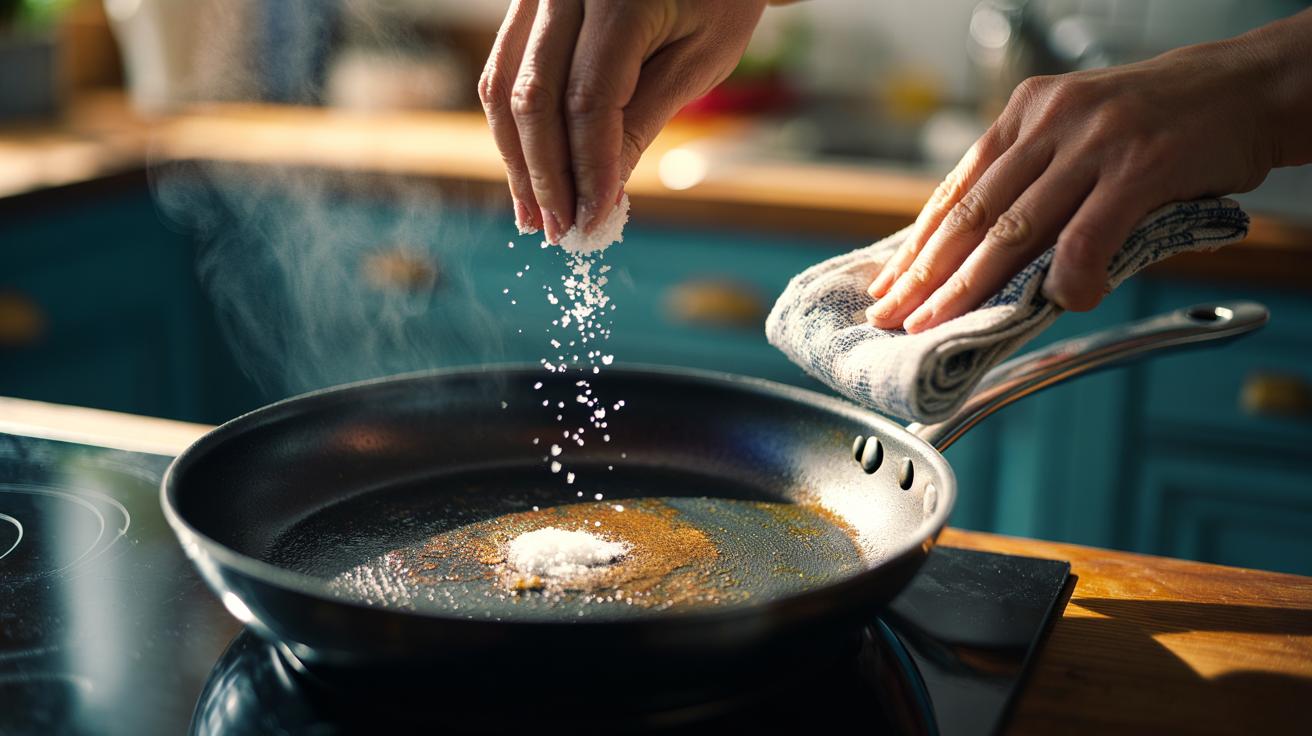
First, pour off excess fat and wipe the pan with a folded paper towel. Warm the pan on low for 30–40 seconds, then take it off the heat. Heat is key yet modest: you want the residue just pliable. Never attack a smoking‑hot pan with salt; you’ll etch coatings and aerosolise oil. Sprinkle 1–2 tablespoons of coarse salt (rock or kosher) across the affected area. For stainless or carbon steel, add a teaspoon of neutral oil or a squeeze of lemon to lubricate the scrub and trap debris.
Use a folded tea towel, cork, or cut potato as a “puck” to drive the salt in small circles. Short, firm strokes. Thirty seconds in, you’ll see greyish paste forming as the salt binds grease. For cast iron, keep it nearly dry—just the salt and the pan’s own oil. For non-stick, switch to fine salt with a soft sponge, very light pressure, and a drop of washing-up liquid. If you hear scratching, stop immediately.
At the 90–120 second mark, tip the dirty salt into the bin. Rinse briefly with hot water. Dry thoroughly. For cast iron, warm for a minute and wipe with a film of oil to protect the surface. Set a timer: two minutes is enough for 90% of pans. If stubborn patches remain, repeat quickly rather than scrubbing harder.
Choosing the Right Salt, Tool, and Pan
Matching grit to surface is the difference between rapid results and needless wear. Coarser crystals bite grease more effectively on bare metal; finer grains and softer tools protect coatings. A dab of oil helps the salt roll instead of skating, while lemon juice boosts cutting power on browned proteins. Use the least aggression that gets the job done.
| Pan Type | Salt | Add-On | Scrubber | Typical Time |
|---|---|---|---|---|
| Cast Iron | Coarse | Tiny oil film | Towel or potato | 90–120 sec |
| Stainless Steel | Coarse | Lemon or a splash of oil | Towel or cork | 60–120 sec |
| Non-Stick | Fine | Washing-up liquid | Soft sponge only | 60–90 sec |
| Copper/Aluminium | Fine–Medium | Lemon; rinse fast | Towel, gentle | 60–90 sec |
Key watch‑outs: aluminium can pit if salt lingers on a wet surface, so rinse and dry promptly. Copper loves lemon and salt for brightening, but don’t overdo the pressure. On any non-stick, pressure—not salt choice—is what causes damage. Keep motion small and controlled. For pans with patterned or honeycomb coatings, default to fine salt plus soapy water and a cloth, then assess.
Tough Cases, Safety, and When to Stop
Encountered lacquered, black patches that feel like tar? That’s often polymerised grease. Salt will weaken edges, but you may need a two-stage approach: brief salt scrub, rinse, then a baking soda paste or a controlled deglaze with just-boiled water for stainless. For cast iron, avoid long water soaks; do a salt scrub, dry, then re‑oil and heat to refresh seasoning. If the residue doesn’t budge after two quick passes, escalate method—not force.
Safety matters. Do not pour greasy, salty slurry down the sink while it’s hot; wipe it into the bin to protect your pipes. Work with warm, not scorching, metal to avoid burns and fumes. Ventilate lightly if you’ve heated the pan. If a pan is enamelled, use fine salt and a soft cloth only. If you see metallic colouring or rainbow tints after cleaning stainless, that’s usually harmless heat tint; a squeeze of lemon clears it.
Know when to stop. A pan with deep scratches or flaking non-stick needs gentler care—or retirement. Salt is a smart first responder, not a cure-all. For daily maintenance, a five-second sprinkle of fine salt on a damp sponge keeps residue from ever building to crisis levels.
This simple salt technique is quick, thrifty, and surprisingly powerful. It scrubs without stripping, respects seasoning, and gets dinner back on schedule. In two minutes you can erase last night’s mistakes, reduce detergent use, and help your pans last longer. Try it tonight after frying an egg or searing steak, and notice how the surface resets. What pan in your cupboard will you test first—and which variation will you choose to crack your most stubborn, shiny film of grease?
Did you like it?4.6/5 (26)