In a nutshell
- 🍋 The power of citric acid in lemon dissolves limescale and soap scum, while citrus oils degrease, restoring high-contrast clarity with minimal streaks.
- ⏱️ A precise 60-second routine: cut and apply in overlapping strokes (0–30s), let acid act (30–45s), then buff with microfibre (45–60s) for a crisp reflection.
- ⚠️ Smart safety: avoid soaking mirror edges/silvering, keep acid off marble/limestone, test antiques, ventilate, and never mix acids with bleach.
- 🧽 Stubborn spots solved: pre-wipe dust, park the lemon on dried toothpaste, use a cotton bud for edge limescale, and warm glass for even coverage—less liquid, more control.
- 🌿 Lasting clarity: DIY spray (1 part lemon to 3 parts distilled water + a drop of washing-up liquid), compost peel, and finish with a dedicated glass towel; reduce hairspray overspray for prevention.
Bathroom mirrors collect the whole story of a morning: steam haze, toothpaste freckles, hair spray overspray. Over time the glass looks tired, the reflection dull. Here’s the surprising fix sitting in your fruit bowl. A fresh lemon, sliced and swiftly swiped, can cut through that cloudy film in a minute flat, leaving a sharper image and a cleaner feel. The secret is simple chemistry and a touch of technique. Yes, you can restore brilliance in roughly 60 seconds without aerosols, dyes, or harsh solvents. With a microfibre cloth and a bit of citrus, the path back to sparkle is short, cheap, and refreshingly fragrant.
How Citrus Chemistry Cuts Through Cloudiness
At the heart of the trick is citric acid, the natural component that gives lemons their tang. On a mirror, that acid tackles two main offenders: limescale from hard water and the waxy residue of soap scum and cosmetics. The acid chelates metal ions, loosening mineral deposits that scatter light and obscure clarity. It also disrupts the slightly alkaline film left by bar soaps and many toothpastes, so it wipes away rather than smearing. This is why lemon works fast. The peel plays a role, too. Natural citrus oils act as a gentle degreaser, lifting fingerprints and hair product mist while adding a temporary gloss.
Crucially, lemon juice is water-based, so it evaporates without leaving a sticky trail. That matters on glass, which shows every streak. You’re not polishing so much as resetting the surface chemistry toward neutrality. The result is a crisp, high-contrast reflection that looks cleaner because the light is no longer being scattered by micro-films. For most domestic mirrors, that’s all you need: acidity to dissolve haze, and a lint-free buff to finish the job.
One-Minute Method: from Slice to Shine
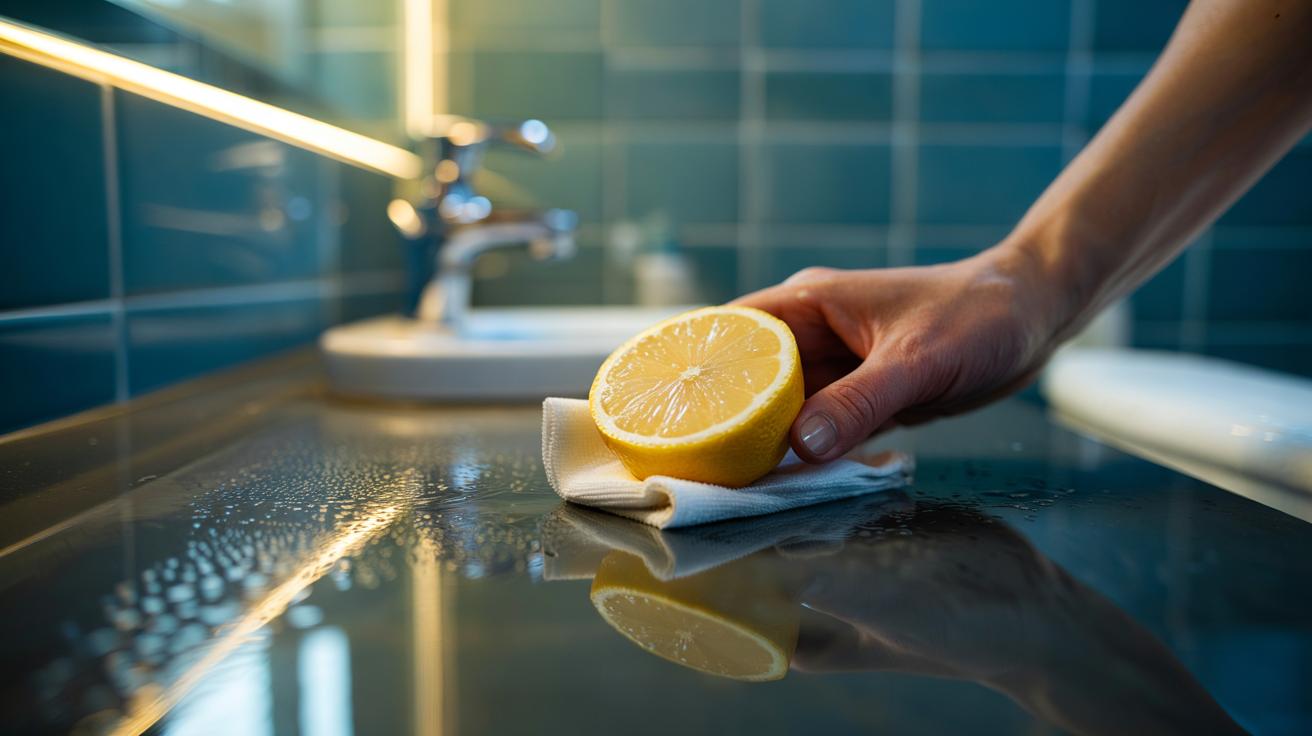
Kit is minimal: one lemon, a microfibre cloth, and kitchen roll. Work in quick beats. 0–10 seconds: cut a lemon and squeeze lightly to bring juice to the surface. 10–30 seconds: starting at the top of the mirror, rub the cut face over cloudy patches in overlapping S-shapes. Use light pressure to avoid drips. 30–45 seconds: pause for a brief contact time so the citric acid can bite into mineral veils. 45–60 seconds: buff firmly with the microfibre, switching to a dry area of cloth as it dampens. Stubborn corners? Twist the lemon to a fresh segment and spot-treat, then buff again. This swift pattern beats streaks because you never let juice sit long enough to dry unevenly.
| Step | Action | Seconds | Why It Works |
|---|---|---|---|
| Prep | Expose juicy lemon flesh | 0–10 | Ensures immediate wetting and even coverage |
| Apply | Swipe in overlapping S-strokes | 10–30 | Maximises contact with haze and fingerprints |
| Activate | Brief 15-second wait | 30–45 | Citric acid dissolves limescale and soap film |
| Buff | Polish with microfibre | 45–60 | Lifts residue for a streak-free finish |
Tip: if your bathroom is cold, fog the mirror with a hot shower for a few seconds beforehand—warm glass spreads liquid more evenly. Do not soak the edges where silvering meets the backing; keep passes light and controlled.
Smarter Tips, Tricky Surfaces, and Safety
Frames and finishes deserve attention. Keep lemon juice away from unsealed wood and avoid dripping onto stone ledges, especially marble or limestone, which acid can etch. Always test a small corner if your mirror is antique or has distressed silvering. For back-painted or bevelled edges, apply with a dampened pad rather than the full lemon to limit run-off. Wear gloves if you’ve any nicks on your hands; lemon stings. If overspray lands on tiles, wipe promptly to prevent grout discolouration. And ventilate: the citrus scent is pleasant, but concentrated vapour in a small cloakroom can feel cloying.
Heavier grime responds to a two-step: pre-wipe with slightly damp kitchen roll to lift dust, then proceed with lemon and a microfibre cloth. For specks of dried toothpaste, park the lemon on the spot for 10 seconds before buffing. Fighting persistent limescale around mirror edges? Apply juice with a cotton bud so you don’t saturate backing materials. Less liquid, more control, cleaner edges. Finally, never mix acids with bleach. If you’ve recently used a bleach-based cleaner nearby, rinse surfaces before reaching for citrus.
Going Beyond the Squeeze: Lasting Clarity with Citrus
If you want the lemon effect on demand, make a quick spritz. Combine 1 part fresh lemon juice with 3 parts distilled water in a spray bottle; add a single drop of mild washing-up liquid. Shake gently. The dilution keeps acidity effective without being aggressive, while the tiny surfactant dose helps the solution sheet rather than bead. Mist lightly, wipe with a damp cloth, then finish with a dry microfibre. Do this weekly in hard-water areas, fortnightly elsewhere. Cost per clean is pennies and the bottle lasts. It’s low-waste, too: compost the spent peel, and you’ve replaced a plastic aerosol with a biodegradable standby.
For a camera-ready gleam, final-buff with a dedicated glass towel or a lint-free tea towel reserved for mirrors. Newspaper used to work, but modern inks can smudge. If your bathroom sees heavy hair spray use, hang the mirror slightly away from the blast zone to reduce sticky overspray. Prevention cuts cleaning time dramatically. Over months, this routine protects that crisp, high-definition reflection we all rely on when rushing out the door.
A lemon brings science and simplicity to the smallest room in the house. In 60 seconds, it dissolves the film that steals brightness and leaves behind a clean, zesty finish without the chemical fug. For renters and homeowners alike, it’s a thrifty, planet-friendly upgrade to the daily mirror check. The key is swift application, brief contact, and a dry, diligent buff. Ready to see your reflection snap back into focus—what spot in your home will you restore with citrus first, and how will you time your own one-minute shine?
Did you like it?4.6/5 (25)