In a nutshell
- 🍞 Explains the science of staling: starch retrogradation and moisture migration, and how a potato slice gently raises humidity to slow crumb firming without touching the loaf.
- 🥔 Step-by-step method: use a raw potato slice wrapped in cloth, keep separation from bread, monitor ventilation, and replace every 24 hours (48 max) to prevent sogginess and mold.
- 📦 Storage guidance: prioritise a ventilated breadbox or linen bag, avoid tight plastic for crusty loaves, and never refrigerate bread due to accelerated retrogradation.
- 🧼 Safety essentials: choose sound, unsprouted potatoes, keep them off the loaf, wipe the breadbox with diluted vinegar, and discard at first sign of mustiness or condensation build-up.
- 🧊 Practical extras: freeze surplus slices to halt staling and revive tired loaves by foil-warming at 150°C to re-gelatinise starches and refresh texture.
Bread goes stale not because it “dries out” alone, but because starches change structure and moisture wanders. That’s the unglamorous science behind a disappointing sandwich. Here’s the surprising fix: use a humble potato as a humidity buffer to keep your loaf plush for days. Done right, the method is simple, low-cost, and gentle on craft loaves with delicate crusts. It won’t turn bread soggy or perfumed. It won’t make your kitchen look like a lab. It just slows staling. Below you’ll find the why, the how, and the safety notes that matter, plus the best containers to pair with this trick for consistently soft, satisfying slices.
Why a Potato Keeps Bread Soft
Staling is a physics-and-chemistry story. The crumb loses flexibility as starch molecules re-order, a process called retrogradation. Moisture migrates from the crumb to the crust and out to the room, leaving bread firm, chalky, and dull. A fresh-cut potato, however, holds abundant water bound in starch granules. That water evaporates slowly. In a confined space, such as a ventilated breadbox, the potato lifts ambient humidity just enough to blunt water loss from the loaf. The gradient softens; the crumb stays tender. You’re not rehydrating bread directly—you’re stabilising the microclimate.
The second benefit is temperature moderation. Evaporative cooling from a small potato slice is slight but real, reducing the surface dryness that accelerates crust toughening. Crucially, you don’t need contact. Keep the potato separate and clean so aroma transfer is minimal. Bakers have long added mashed potato to dough to extend softness; the storage hack borrows the same principle—starch and gentle humidity—without changing your recipe. For lean loaves, enriched breads, and even supermarket sliced, the approach consistently buys extra time before the crumb turns rigid.
Practical Steps: The Potato-in-the-Breadbox Method
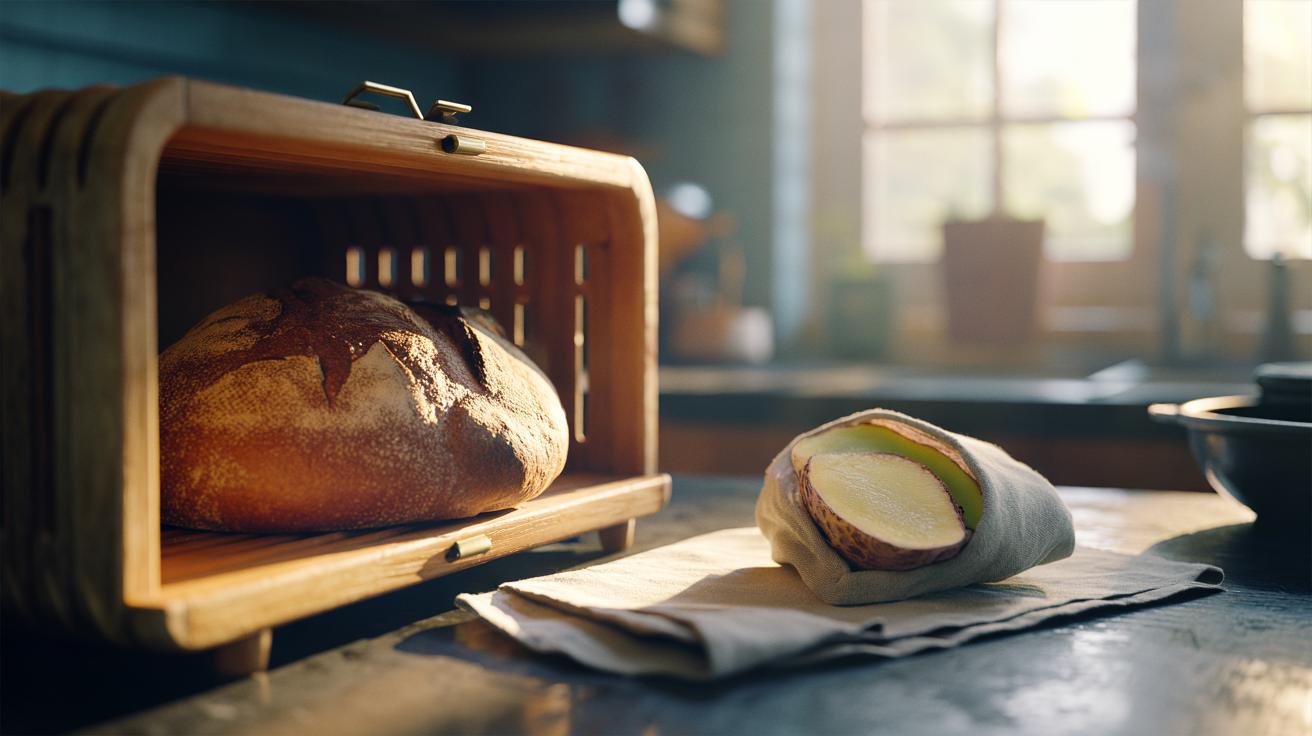
Use a raw, firm potato with no sprouts or green patches. Cut a 5–7 mm slice or two small wedges. Pat the cut faces dry, then wrap loosely in clean cheesecloth or a paper towel to prevent direct wet contact. Place the wrapped potato in your breadbox or fabric-lined tin, at least a few centimetres away from the loaf. Do not let it touch the crust. Separation is essential. This creates a gentle humidity halo rather than a damp spot.
Ventilation matters. A good breadbox has tiny vents; leave them open so moisture can circulate without condensing. If you store bread in a linen or cotton bag, pop the wrapped potato inside the box or cupboard, not inside the bag. Check once or twice a day. If you see condensation on the container walls, open briefly to release it. Replace the potato slice every 24 hours—48 at most. That’s the difference between a soft loaf and a mold festival. For large sandwich loaves, use two small slices at opposite corners, never stacked, and reduce to one when humidity feels stable to the touch.
Best Containers and Storage Conditions
Think of storage as a balancing act: keep humidity high enough to preserve the crumb but low enough to avoid condensation and mold. Wood or metal breadboxes with vents hit the sweet spot. Linen bags slow drying while letting excess moisture escape. Paper works for crust protection but dries crumb fast. Plastic is tricky: great for supermarket sliced bread that’s already soft and preservative-stabilised, risky for crusty loaves that will sweat. Never refrigerate bread, because cold accelerates starch retrogradation and makes slices tough, even if they feel damp.
| Method | Pros | Cons | Best For | Typical Extension |
|---|---|---|---|---|
| Potato slice in breadbox | Boosts humidity gently; easy; cheap | Needs daily replacement; monitor for condensation | Artisan loaves, enriched breads | +1–2 days of softness |
| Linen/cotton bag | Breathable; protects crust | Faster crumb drying without humidity aid | Sourdough boules, baguettes | +0.5–1 day |
| Paper bag | Shields crust from drafts | Crumb stales quickly | Short-term holding | Same day |
| Plastic bag (sealed) | Maximises softness | Soggy crust; mold risk | Pre-sliced, factory bread | +2–3 days |
| Freezing slices | Stops staling; long storage | Requires planning; reheating | Batch baking, surplus | Weeks to months |
For everyday loaves, pair a ventilated box with the potato trick and a linen bag. Keep the cut face of the loaf down on a board when out for meals to minimise surface drying. Aim for cool room temperature and gentle airflow. If you routinely cook in a steamy kitchen, move the bread to a drier shelf to avoid condensation spikes that favor mold.
Science and Safety: Moisture, Starch, and Mold
Softness is about water mobility. Potato slices raise local humidity, slowing water diffusion out of the crumb. They don’t “re-hydrate” bread; they reduce the rate of moisture migration and delay retrogradation. Still, any humidity boost raises mold risk. Keep the potato clean, wrapped, and off the loaf. Wipe your breadbox every few days with a diluted vinegar solution and dry fully. At the first sign of spots or a musty smell, discard the potato and clean. Use smaller slices in warm weather, and never reuse yesterday’s piece.
Choose sound, unpeeled potatoes without green tinge, and discard if they sprout. Green patches signal solanine; while your bread won’t contact the potato, it’s best practice to avoid compromised tubers in food storage. Don’t refrigerate bread: 0–5°C accelerates staling even inside plastic. If a loaf is past its soft peak, refresh gently—wrap in foil and warm at 150°C for 10–12 minutes to re-gelatinise surface starches. The crumb relaxes, the aroma blooms, and the crust can be re-crisped by removing foil for a minute or two. That’s your rescue plan, not your everyday routine.
A potato slice won’t make a week-old loaf taste like the minute it left the oven, but it can hold back the slide for the crucial midweek sandwiches and toast. Pair the method with a ventilated box, a linen bag, and smart portioning—freeze what you won’t eat in two days, and refresh as needed. Small, consistent habits beat big promises. Ready to trial the trick with your next loaf and fine-tune the slice size, container, and replacement schedule to suit your kitchen’s climate—what will your setup be?
Did you like it?4.5/5 (26)