In a nutshell
- 🧪 Science of lift: Vinegar’s acid reacts with bicarbonate of soda to release carbon dioxide, inflating batter while a lower pH tempers gluten for a tender crumb.
- 🧂 Choose the right vinegar: Distilled white is neutral and reliable; apple cider vinegar flatters chocolate and spice; white wine and rice are mild; avoid strong-flavoured balsamic/malt for sweet cakes.
- ⚖️ Ratios and timing: About 1 tsp vinegar per 1/2 tsp bicarb per 120g flour, adjusted if using buttermilk, yoghurt or natural cocoa; combine quickly and get batter into a preheated oven within 5 minutes.
- 🧁 Method tips: Use room-temperature eggs and dairy, thoroughly whisk dry ingredients, fold gently to preserve bubbles, line tins, and avoid opening the oven early for a higher, finer crumb.
- 🛠️ Troubleshooting: Metallic taste = too much bicarb or too little acid; dense or sunken centres signal old leaveners or overmixing; reduce bicarb to prevent tunnelling and choose vinegar to keep flavour neutral.
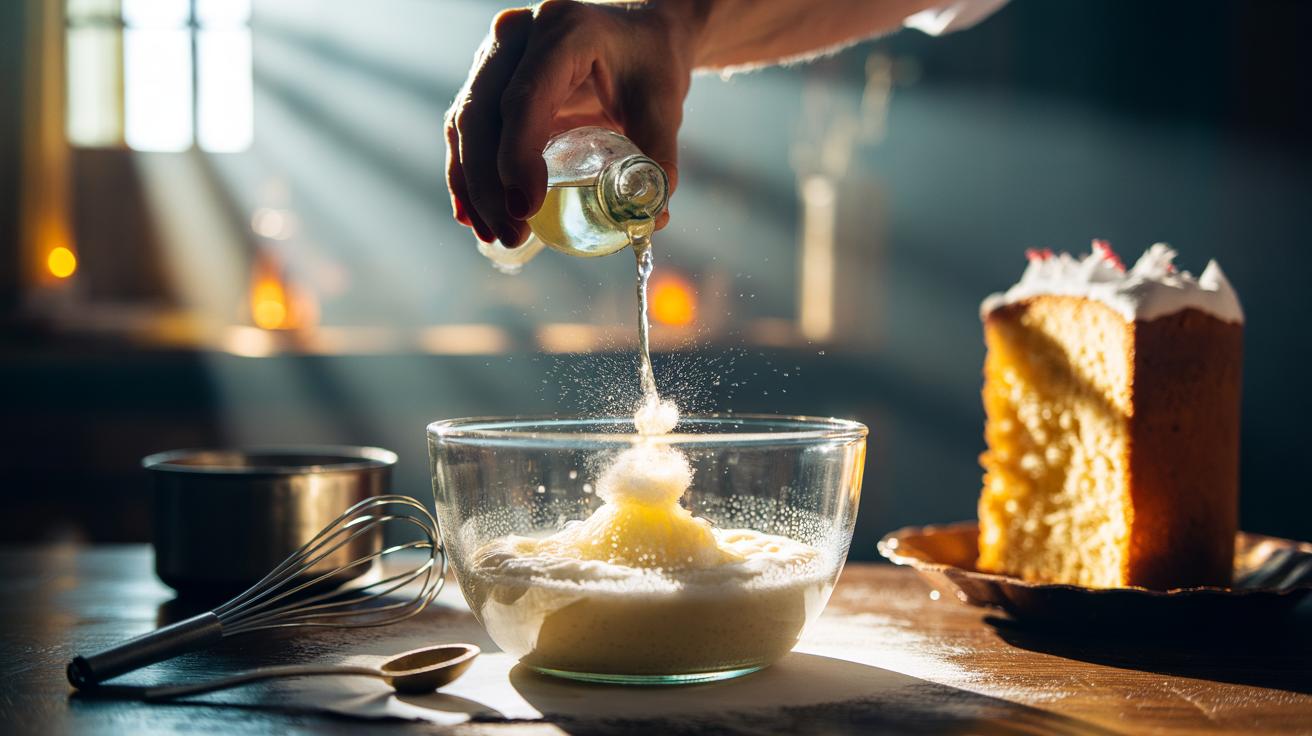
It sounds counterintuitive, yet bakers have known it for generations: a dash of vinegar can turn an ordinary cake into a cloud-light marvel. This quiet hero doesn’t add sourness when used wisely. It adds lift. It adds tenderness. It refines crumb. In the bowl, its gentle acidity wakes up bicarbonate of soda, creating bubbles that inflate the batter before the heat sets structure. Used with restraint, the flavour remains neutral, yet the texture is transformed. The result is a taller rise and a softer, more delicate bite. Here’s how this simple bottle on your shelf can bring bakery-level fluffiness to your home bakes.
The Science Behind Vinegar and Lift
At the heart of vinegar’s magic lies chemistry. Combine a mild acid with bicarbonate of soda and you get carbon dioxide gas. Those microscopic bubbles push against batter, stretching it upward while heat firms proteins and starch. The trick is balance. Enough acid to generate gas and tame alkalinity, not so much that the batter turns slack. The most reliable cakes align acid, leavener, and structure. Think of vinegar as the conductor of that trio, keeping timing precise and textures consistent.
Acidity also shapes tenderness. Lowering the batter’s pH slightly weakens gluten formation, which means less chew and a more tender crumb. It helps proteins—particularly from egg—coagulate at a controlled pace, so the cake sets evenly without tunnelling. That’s why vinegar shines in delicate sponges and chocolate cakes alike. Tiny tweak. Big payoff.
Flavour? Used at baking levels, it fades. Distilled white brings practically no taste; apple cider vinegar adds the barest roundness. What remains is texture: fine, even bubbles, confident height, and a moist slice that keeps well. When your batter looks silky and slightly aerated before it hits the oven, you’re doing it right.
Choosing the Right Vinegar for Baking
Not all vinegars are equal in the bowl. For cakes, your watchwords are acidity, cleanliness of flavour, and consistency. Distilled white (often labelled “spirit vinegar” in the UK) is the workhorse: about 5% acetic acid, neutral taste, predictable results. Apple cider vinegar sits in the same acidity bracket but brings a whisper of fruit that flatters spice or carrot cakes. White wine vinegar is gentle and can slot into lighter sponges. Rice vinegar is milder; you’ll often need a touch more. Avoid balsamic and dark malt vinegars for sweet bakes—their strong flavours muddy delicate crumbs.
A practical rule: pair roughly 1 teaspoon vinegar with 1/2 teaspoon bicarbonate of soda in the batter. If you’re already using acidic dairy—buttermilk, yoghurt, sour cream—reduce the vinegar or the bicarb accordingly. The aim is to neutralise alkalinity while generating gas, not to acidify the batter excessively. Below is a quick-reference guide you can keep near the mixing bowl.
| Vinegar Type | Typical Acidity | Flavour Impact | Best Use | Suggested Amount per 120g Flour |
|---|---|---|---|---|
| Distilled White | 5% | Neutral | General cakes, light sponges | 1–2 tsp (with 1/2–1 tsp bicarb) |
| Apple Cider | 5% | Soft, fruity | Carrot, spice, chocolate | 1–2 tsp |
| White Wine | 6% | Delicate | Vanilla, genoise-style | 3/4–1 1/2 tsp |
| Rice (Unseasoned) | ~4% | Mild | Light sponges | 1 1/2–2 tsp |
| Malt/Balsamic | 5–6%+ | Strong, distracting | Not recommended for sweet cakes | — |
When in doubt, choose distilled white for a clean result and reproducible lift. It’s the simplest path to a high-rise crumb without flavour complications.
How to Add Vinegar: Ratios, Timing, and Tips
Start with balance. For every 120g flour, plan on 1/2–1 teaspoon bicarbonate of soda paired with 1–2 teaspoons vinegar, adjusting down if your recipe includes acidic elements like cocoa (natural, not Dutch-processed), buttermilk, yoghurt, or brown sugar with molasses. Dutch-processed cocoa is neutral, so it needs the vinegar more. The goal is gentle fizz, not a frothing volcano.
Method matters. Whisk dry ingredients thoroughly to disperse bicarb evenly. Mix wet ingredients in a separate bowl. Add vinegar to the wet mixture just before combining, or stir it into milk to create a quick faux-buttermilk. Bring wet to dry and fold swiftly until just combined. Those bubbles are precious; don’t beat them out. Get the batter into the tin and the tin into a properly preheated oven within 5 minutes. Speed locks in lift.
A few pro moves: use room-temperature eggs and dairy for better emulsification; line tins to encourage even rise; avoid opening the oven during the first two-thirds of baking. If your cakes dome aggressively, reduce bicarb slightly or increase the acid by a quarter teaspoon. For chocolate cakes, a touch of apple cider vinegar enhances depth without announcing itself. Simple, effective, reliable.
Troubleshooting: Common Mistakes and How to Fix Them
Metallic or soapy taste? That’s excess bicarbonate of soda or insufficient acid. Fix by increasing vinegar by 1/4–1/2 teaspoon next time, or by reducing bicarb by the same amount. If the batter isn’t using buttermilk or yoghurt, consider swapping part of the milk for an acidic dairy to help buffer flavours. A neutral-tasting cake is the sign your acid–alkali balance is right.
Dense crumb with poor rise often points to old leaveners or overmixing. Check dates on bicarb and baking powder. Sift dry ingredients to eliminate clumps. Fold, don’t beat, once bubbles appear. If the centre sinks or tunnels form, you likely had too much gas too quickly; dial the bicarb back by 1/4 teaspoon and bake at a steady, verified temperature. An inexpensive oven thermometer can be transformative.
Vinegar tang noticeable? You added too much or too late. Incorporate it into the wet mixture and combine promptly, so the reaction begins in the bowl, not in the tin. For flavour-heavy bakes—spice, cocoa, carrot—use apple cider vinegar to mask edges. For delicate vanilla sponges, choose distilled white. Small changes to ratio and timing cure almost every texture issue.
In the end, this is about control. A teaspoon or two of vinegar tunes leavening, reins in gluten, and turns homely batter into a buoyant, bakery-worthy crumb. It’s thrifty, predictable, and right there in the cupboard. Once you’ve seen the rise—clean slices, fine bubbles, tender bite—you won’t bake the same way again. Master the ratio, mind the clock, and let chemistry lift your cake. Which recipe will you try first with this small but mighty tweak, and which vinegar will you choose for your signature slice?
Did you like it?4.6/5 (20)