In a nutshell
- 🧊 Revive limp leaves with a cold ice bath; in about 2 minutes most lettuce regains crispness and fresh bite.
- 🧪 The science: osmosis restores water to cells and turgor pressure, while cold tightens membranes and slows moisture loss.
- ⏱️ Method: separate leaves, trim ends, submerge in 0–4°C water for 2 minutes, then spin-dry thoroughly and store with a paper towel.
- 🧼 Safety: if leaves are slimy, smelly, or blackened, bin them; use clean cold water, good hygiene, and dress at service to prevent re-wilting.
- 🥕 Beyond lettuce: celery, radishes, carrots, and many herbs perk up fast; keep basil only cool, avoid salted baths, and keep cucumber soaks brief.
Limp salad leaves are not a lost cause. They’re thirsty. Give them water, give them cold, and nature often obliges with a snap-back to crispness. In kitchens from Glasgow to Gloucester, the quickest fix is an ice bath. Done right, the chill can revive lettuce in as little as 2 minutes. The science is simple and satisfying; the payoff is a bowl that looks shop-fresh. This is not culinary trickery, it’s plant physiology doing you a favour. Below, I break down why it works, how to do it precisely, and when to skip the rescue. Your next salad could be saved, not scrapped.
Why Lettuce Wilts and How Cold Reverses It
When lettuce wilts, it’s not “going off” so much as losing water. Those supple cells inside the leaf need liquid to stay pressurised. Lose enough moisture through cut stems or a warm fridge, and turgor pressure drops; the leaf collapses. It looks dead. It isn’t. The fix is rehydration. Cold water moves back into cells via osmosis, restoring the gentle internal pressure that gives leaves their snap. Chill changes pace, too. Lower temperature slows respiration and enzyme activity, reducing further moisture loss while keeping cell membranes tighter and less leaky.
Now add ice. The sharp cold nudges membranes to behave like orderly barriers again, so water enters cells rather than drifting out. Air dissolved in cold water can fill intercellular spaces, subtly plumping texture. Calcium and pectins in the cell wall network stiffen slightly under chill, adding a modest crunch effect. Two minutes can be enough for a visible change in limp but unspoiled lettuce. Severely dehydrated leaves may need longer, yet the principle stands: cold plus water equals structure restored, often startlingly fast.
The Two-Minute Ice-Bath Method, Step by Step
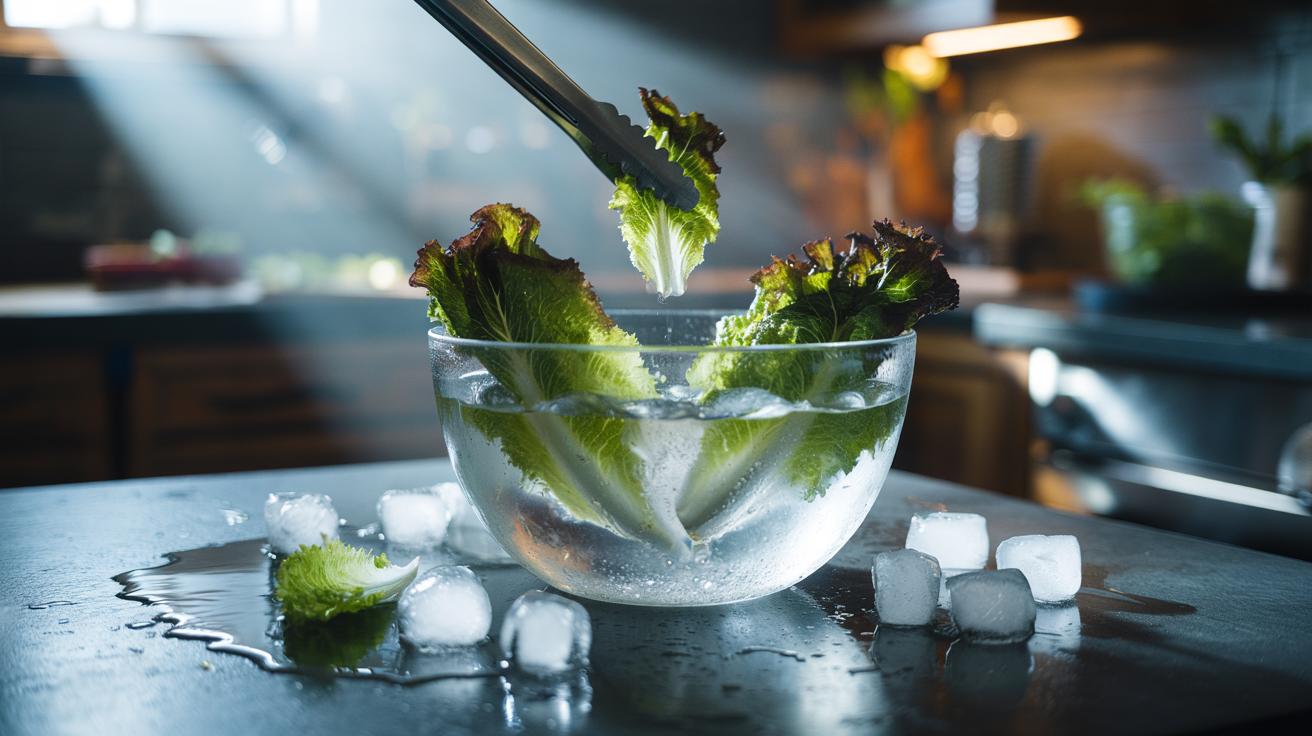
Start with clean, potable water. Fill a large bowl with cold tap water and a generous handful of ice. You want properly cold, near 0–4°C. Separate the lettuce leaves. Trim the ends if they’re browned, which opens fresher pathways for water uptake. Submerge fully. Swish gently to dislodge grit and expose every surface. Set a timer for 2 minutes. Watch the texture: edges lift, veins look firmer, the leaf regains its lift. For tougher varieties like romaine, give it up to 5 minutes, but don’t oversoak—texture can become waterlogged.
When it looks revived, lift the leaves into a spinner. Spin hard. Any residual surface water will dilute dressing and soften the leaf again. No spinner? Pat dry between clean tea towels. Store the revived lettuce in a container lined with a paper towel, loosely sealed to let moisture balance. Season only at service; salt draws water back out. For speed, do the ice bath while prepping dressing and toppings. The key is efficient chill, rapid drying, then cold storage. Done, you’ve got a crisp base—rescued, not replaced.
| Step | What to Do | Why It Works | Time |
|---|---|---|---|
| Prep | Ice water in a large bowl | Maximises temperature shock | 1 minute |
| Submerge | Separate, swish leaves under | Boosts osmosis, cleans grit | 2 minutes |
| Dry | Spin or towel thoroughly | Prevents re-wilting | 1–2 minutes |
| Store | Paper towel–lined box, fridge | Holds turgor, controls humidity | Up to 48 hours |
Safety, Quality, and When to Skip the Rescue
Not all wilt is equal. If leaves are simply floppy, pale at the edges, or a touch tired, an ice bath is ideal. But if they’re slimy, smelly, or dotted with black rot, don’t revive—bin them. Water won’t reverse microbial spoilage; it can spread it. Use cold, drinkable water and clean bowls. Wash your hands and knife. This is kitchen hygiene, not fussiness. Crispy salad is pointless if it’s unsafe.
Texture matters too. Baby leaves can go from limp to lively in two minutes; thicker romaine ribs might prefer three to five. Avoid soaking for ages. Overhydrated leaves can bruise, and flavour leaches. Once revived, dry thoroughly and keep chilled. A loosely sealed container with a paper towel manages humidity, keeping cell walls firm without sogginess. Dress at the table, not in advance; salt and acid start pulling water out again. If you want extra brightness right before serving, mist with cold water, spin quickly, then dress. The rescue should taste as clean as it looks.
Beyond Lettuce: Other Produce That Perks Up on Ice
This trick isn’t only for salad leaves. Celery sticks regain their snap in minutes. Radishes and carrots come back with a glassy crunch, their xylem tissues drinking deeply. Fresh herbs like parsley and mint perk up quickly; basil is fussier—keep it cool but not icy or it may blacken. Cucumber discs? Brief and gentle only, or they turn spongy. Sugar snaps and mange tout respond well; they shine after a quick chill followed by careful drying.
You can tweak the bath. A pinch of sugar supports flavour in carrots; a drop of lemon keeps cut apples from browning, though apples won’t become crisper in the same way. Leave salt out: it pulls water out of cells. For bouquet-style storage of herb bunches, stand stems in cold water in the fridge and loosely tent the leaves. Works a treat. Most crucially, timing matters. Ice wakes up produce that’s thirsty, not produce that’s dying. Use your nose and eyes. When the signs are right, the chill delivers reliable, quick wins across the crisper drawer.
In the end, the shortest path from limp to lively is a bowl of icy water and a timer. The method is cheap, fast, and grounded in the quiet physics of osmosis and turgor pressure. It rescues a weeknight salad, elevates a lunch wrap, and saves money otherwise lost to binning greens. Two minutes can change the texture of dinner. Will you try the ice-bath test on your next tired head of lettuce—and which other vegetables will you dare to revive for a crisper, cleaner plate?
Did you like it?4.7/5 (27)