In a nutshell
- 🧪 Baking soda neutralises odours via adsorption and gentle acid–base reactions, reducing volatile compounds and light moisture in carpet fibres for a cleaner, fresher scent.
- ⏱️ 10-minute method: vacuum first, sprinkle 2–3 tbsp per m², gently work in, wait 10 minutes, then vacuum slowly in two directions—keep the carpet dry to avoid paste.
- 🔁 For stubborn smells: extend dwell to 30–60 minutes or repeat; blot source spots; use a light vinegar blot before bicarbonate on old urine; patch-test delicate fibres and boost airflow.
- 🛡️ Safety and practical tips: sprinkle low to minimise dust, keep pets and children out during treatment, empty the vacuum canister after, use HEPA if available, and avoid untested essential oils.
- 💷🌿 Cost-effective and eco-friendly: about £1–£2 per 500g, no dyes or heavy perfumes, less packaging waste, and versatile for fridges, trainers, and bins as well as carpets.
The quickest way to revive a tired carpet isn’t a pricey spray, it’s a pantry staple. Reach for baking soda and let chemistry do the heavy lifting. This simple hack targets the molecules that make rooms smell musty after rain, smoky after parties, or a bit “dog” after walks. It’s quiet, low cost, and fast. In many cases, you can noticeably reduce odours in just 10 minutes. No sticky residue. No synthetic perfume cloud. Whether you rent a flat or own a family home, this is a reliable reset between deeper cleans and an easy win before guests arrive.
How Baking Soda Neutralises Persistent Carpet Odours
At its core, baking soda (sodium bicarbonate) is a mild alkaline powder with remarkable surface area. Those microscopic particles cling to volatile compounds responsible for odour, pulling them out of air and fibre. It doesn’t simply perfume the room. It helps neutralise many acidic and sulphurous molecules that noses read as “off”. That’s why a quick sprinkle can quieten the stale scent of yesterday’s takeaway, damp dog, or a commuter’s trainers left by the radiator.
The mechanism is twofold. First, adsorption: the powder’s tiny grains act like miniature magnets for smell-causing molecules, especially in the porous top layer of a carpet. Second, gentle acid–base reactions: many malodours skew acidic; bicarbonate nudges them towards neutral, reducing their volatility. Add in light moisture absorption, and you slow the release of odours while softening any tacky residues lurking in the pile. The result feels like opening a window where there isn’t one. It’s science, not sorcery, and that’s why it works consistently on everyday smells rather than just covering them with fragrance.
A 10-Minute Method You Can Do Between Meetings
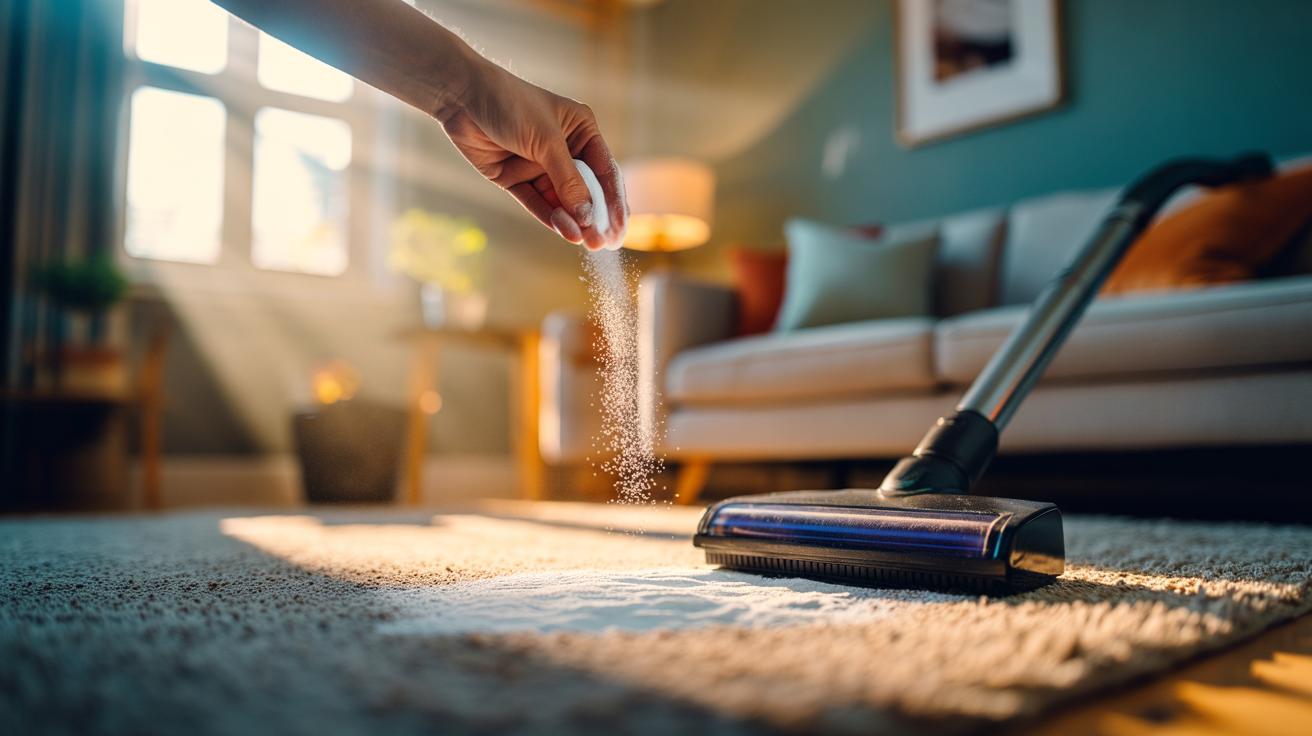
Start by giving the carpet a brisk vacuum to lift grit and lint; you want baking soda in contact with fibres, not sitting on dust. Sprinkle a light, even layer—about 2–3 tablespoons per square metre, enough to faintly frost the surface. Work it in gently with your palm or a soft brush. Set a timer for ten minutes. That short window is often enough for cooking and light pet odours. Keep the carpet dry—do not mist water or you’ll make a paste that clings. Finish with a slow, thorough vacuum, passing in two directions to collect the fine powder.
| Step | Time | Why It Matters |
|---|---|---|
| Vacuum first | 2 minutes | Removes debris so bicarbonate reaches fibres. |
| Light sprinkle | 1 minute | Maximises contact without clogging the pile. |
| Wait | 10 minutes | Allows adsorption and neutralisation to occur. |
| Vacuum slowly | 3–5 minutes | Collects powder and trapped odour molecules. |
A few practical notes. Empty a bagless canister afterwards if you’ve treated a large room; the fine powder accumulates. Sensitive lungs? Wear a light mask while applying. Avoid essential oils on the carpet unless you’ve patch-tested—some leave marks. And store the box sealed: fresh, dry powder performs best.
When You Need More Than Ten Minutes
Some smells dig in. Pet accidents, spilled milk, cigarette smoke in thick piles—these aren’t the average stale-room whiff. For these, extend the dwell time to 30–60 minutes, or repeat the quick cycle twice. If there’s an obvious source spot, blot first. Then lightly dust with baking soda, wait, vacuum, and reassess. Stubborn odours usually respond to time and repetition. On older urine marks, a pre-step helps: mist a paper towel with white vinegar, blot the area (don’t soak the carpet), then apply bicarbonate once it’s just barely damp to the touch. This manages acidity without flooding fibres.
Be cautious with delicate natural fibres. Wool and silk rugs can be treated with a very light hand, but always patch-test in a corner, and avoid vigorous brushing that raises fuzz. If the underlay is contaminated, no surface method will fully fix it; you’ll need a deeper clean or replacement. Remember airflow: opening windows speeds clearance of any residual mustiness. For smokers’ rooms, run two passes a day apart. It’s methodical, not glamorous, but it steadily pushes the space back to fresh.
Cost, Safety, and Environmental Upside
In the UK, a 500g box of baking soda costs roughly £1–£2 and covers several rooms, far less than branded carpet deodorisers. You’re paying for function, not fragrance. It contains no dyes or heavy perfumes that can irritate sensitive noses. For households with children or pets, that matters. Still, respect the dust: sprinkle low and close to the pile, not from shoulder height, to avoid a cloud. Keep pets out of the room during the wait, and vacuum thoroughly before they return. Ingestion of small traces is generally low risk, but bowls of water and food should be moved away during treatment.
There’s a green bonus too. Using a single-ingredient powder means fewer aerosols and less plastic packaging. The product does double duty across the home—fridge, trainers, bins—so nothing sits idle in a cleaning caddy. Vacuums with HEPA filters cope fine, but if yours struggles with ultra-fine dust, use shorter treatments and empty the bin promptly. And a pro tip: decant into a shaker with small holes for even application. It reduces waste and gives you cleaner lines along skirtings and under sofas.
Ten minutes, one cupboard staple, and a modest vacuum session—that’s the recipe for a fresher room when time is tight and budgets are tighter. Baking soda won’t replace a deep steam clean, yet it wins the everyday battles that keep homes from drifting into musty. It’s calm, predictable chemistry applied to modern life’s mess. The question is simple: where will you try this first—the hallway runner, the living-room rug, or the dog’s favourite corner?
Did you like it?4.4/5 (25)