In a nutshell
- 🧪 Why it works: acetic acid in white vinegar dissolves alkaline residue and evaporates cleanly, delivering a crisp, streak-free finish without fragrances or polymers.
- 🕒 Two-minute method: Mix 1:1 vinegar:water, mist lightly, wipe in overlapping S-patterns top to bottom, then dry buff; add one drop washing-up liquid for greasy panes.
- 🧰 Tools and ratios: Use short-pile microfibre and a fine-mist bottle; choose 1:1 for weekly cleans, 2:1 (vinegar-heavy) for hard-water spots, and keep a second cloth strictly for the final buff.
- 🛠️ Troubleshooting: Prevent streaks by avoiding overspray, swapping clean cloths mid-session, and working out of direct sun; switch to distilled water or a 2:1 mix if minerals linger.
- ⚠️ Safety and care: Protect natural stone sills and unfinished wood, check aftermarket tint film guidance, and launder microfibres without fabric softener to maintain their streak-busting bite.
Rage against greasy fingerprints and mineral haze with a bottle already in your cupboard. White distilled vinegar cuts through window grime fast, without perfume fog or sticky residue. In just two minutes per pane, you can pivot from dull to dazzling. The trick isn’t magic. It’s method. A correct mix, a clean cloth, and a swift pattern deliver streak-free clarity that rivals pro kits. Work small, wipe smart, and finish dry. That’s the formula. And it’s kinder on your wallet and the planet than solvent-loaded sprays. If time’s tight and sunlight is harsh, don’t worry. A few adjustments keep shine on schedule.
Why Vinegar Works on Glass
At the heart of this quick routine is acetic acid, the active component in vinegar. It’s mild—usually around 5%—yet effective against the alkaline film that builds from tap water, soaps, and airborne pollutants. Where standard cleaners can leave fragrance oils and polymers behind, vinegar dissolves the residue, then flashes off cleanly. That’s why the finish looks crisp rather than glossy or smeared. It’s also naturally deodorising, which makes post-clean odours vanish instead of simply being masked.
Glass is non-porous, so the acid doesn’t need to soak. It needs access. That’s delivered by a fine mist and a microfibre cloth with densely split fibres that physically lift grime. The fibres trap particles, stopping them from dragging across the pane and carving faint, visible arcs. Combine chemical simplicity with mechanical lift and you get speed. Two minutes is realistic because you eliminate re-wiping passes and long dry times.
There are caveats. Avoid splashing vinegar onto natural stone sills (marble, limestone) or unfinished wood; the acid can etch or spot. For glazed frames and standard float or tempered glass, it’s safe. If your window has aftermarket tint film, check the installer’s guidance—most films tolerate diluted vinegar, but adhesive warranties vary.
Two-Minute Method: Step-by-Step
Start with a quick prep. Crack the window for ventilation. Shake out a clean, dry microfibre to remove dust; a 10-second once-over at the top edge stops grit from streaking downward. Mix your spray: equal parts white vinegar and warm water in a fine-mist bottle. Warmth speeds evaporation. If the glass is visibly greasy—kitchen splashback windows, for example—add a single drop of mild washing-up liquid to the bottle the first time, then switch back to the plain 1:1 mix for upkeep.
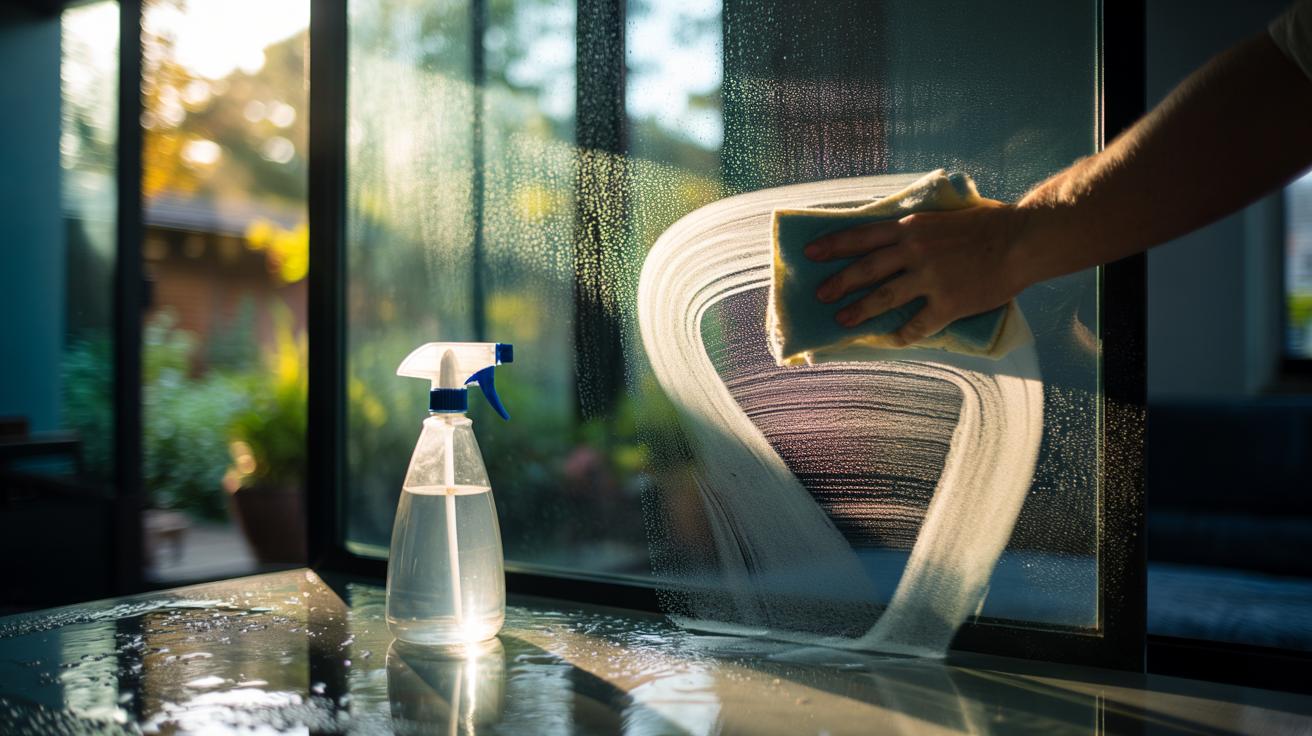
Now for the 90-second core. Mist the pane lightly; you want a peppering, not a drizzle. Wipe in overlapping S-patterns from top to bottom, keeping the cloth flat so its full nap collects the solution. Flip the cloth to a drier quarter as you descend. The moment the glass looks uniformly damp—not wet—you’re on track for a streak-free finish. Resist the urge to overspray. Too much liquid equals minerals left behind as the water dries.
Finish with a 20–30 second buff. Switch to a second, completely dry microfibre or the unused side of your first cloth. Quick, light circles, then a final vertical pass at the edges and corners where solution pools. That’s it. One pane. Two minutes. Razor-sharp clarity without a squeegee, though a small squeegee speeds big patio doors if you prefer that glide.
Tools, Ratios, and Quick Alternatives
You don’t need a kit bag, just smart choices. Use lint-free microfibre (short pile for glass) and a bottle that delivers a fine mist. Tap water works in soft-water areas; if your kettle crusts quickly, use cooled boiled water or distilled water to prevent spotty drying. For frames, a separate cloth keeps the glass cloth pristine. Clean tools are non-negotiable; a dirty cloth writes streaks you’ll chase for ages. Keep a small caddy: vinegar, water, two cloths, optional squeegee. That’s your whole operation in one hand.
| Use Case | Vinegar:Water Ratio | Additive | Time per Pane |
|---|---|---|---|
| Routine weekly clean | 1:1 | None | 2 minutes |
| Greasy kitchen film | 1:1 | 1 drop washing-up liquid | 3 minutes |
| Hard-water spotting | 2:1 (vinegar-heavy) | None | 3–4 minutes |
| Cold, damp days | 1:1 (warm water) | Dry buff emphasis | 2–3 minutes |
If vinegar scent bothers you, cut it with a few drops of lemon or lavender essential oil, though the smell fades quickly as vinegar evaporates. For panoramic glass, a compact squeegee can shave seconds while your cloth handles detail work at the edges. Be ruthless about maintenance: wash microfibres separately, no fabric softener, low heat. They’ll last hundreds of cycles and, crucially, keep their streak-banishing bite.
Troubleshooting Streaks and Smears
Streaks usually trace back to three culprits: overapplication, dirty cloths, or sunlit glass that dries before you reach it. Fix the first by misting lighter—one pass per section is enough. Solve the second by swapping cloths mid-session if they feel damp or gummy. As for sunlight, work in shade or early evening. Glass that dries too fast will always show swipe marks, however perfect your technique. Timing and light matter as much as chemistry.
Cloudy arcs can also signal hard-water minerals. Switch to distilled water in your mix or go vinegar-heavy at 2:1 for a “reset” clean, then revert to 1:1 next time. If the haze persists, it may be on the inside of double glazing or due to a degraded seal—cleaning won’t cure that. Persistent rainbow sheens? That’s leftover detergent. Rinse with plain 1:1 vinegar and re-buff with a fresh, dry cloth.
Lint specks come from tired towels or fluffy paper. Use short-pile microfibre only. For corners and gasket lines, pinch the cloth into a tight wedge and drag once; don’t scrub. If your cloth snags on debris, pause and pick off the grit to avoid micro-scratches. Remember to shield nearby stone sills with a dry towel. A clean finish is a careful finish, and it shows the moment the sun hits the pane.
With the right ratio, a fine mist, and a clean microfibre, vinegar turns window care into a brisk, satisfying ritual. It’s cheap, low-waste, and dependable across seasons. The shine isn’t theatrical; it’s quietly immaculate, the kind you notice when the room seems brighter and the outdoors looks closer. Two minutes per pane is a standard you can actually keep. Ready to assemble your tiny kit, set a timer, and test the method on your most sunlit window—then tell me how clear the view looks from your side?
Did you like it?4.7/5 (23)