In a nutshell
- 🧺 Use dryer sheets to quickly temper musty odours via fragrance microcapsules and fabric conditioners; they freshen closed spaces but mask, don’t mend underlying moisture or mould.
- 📌 Follow smart placement: clip sheets to corners and rails, tuck in shoes and bins, spread small pieces for better airflow, and replace every 2–4 weeks; date sheets to “see freshness anytime.”
- 💧 Pair scent with humidity control: add desiccants (bicarbonate, charcoal, zeolite), air out shelves, and keep closets around 50% RH for lasting results.
- 🌿 Choose safe, sustainable options: hypoallergenic or low-VOC sheets, compostable cellulose bases, recyclable packaging; reuse spent sheets in drawers or as lint lifters, or scent with a drop of essential oil.
- 🚩 Watch for red flags: odour returning within 24 hours, spotting or tide marks, or earthy notes; clean, launder, improve ventilation, and investigate leaks rather than piling on fragrance.
Sometimes the problem isn’t dirt, it’s atmosphere. Open a cupboard or closet and a stale puff hits you: trapped humidity, dormant fabrics, the faint echo of last winter’s boots. Fast fixes matter in busy households. That’s where humble dryer sheets step in, not just as laundry sidekicks but as sly, space-saving deodorisers. They’re thin, inexpensive, and easy to tuck away. Used wisely, they help you deodorise musty closets and refresh wardrobes without heavy sprays. The trick is placement, rotation, and pairing sheets with basic moisture control so scent isn’t merely masking a bigger issue. Think of them as a frontline defence while you stabilise the environment behind the doors.
Why Dryer Sheets Tackle Musty Odours
Dryer sheets are engineered to soften fibres and curb static through a blend of fabric lubricants, surfactants, and fragrance microcapsules. Those same compounds make them stealthy odour fighters. When air moves through a closet, the sheet’s coating releases a gentle scent that binds to stale molecules, blunting that old-cardboard reek. The base material—usually cellulose or a synthetic nonwoven—acts like a little billboard for fragrance, diffusing slowly so you get endurance rather than a sharp hit. They don’t remove moisture or mould spores, but they temper the immediate, nose-level experience of a closed space.
In humid homes, mustiness is often about volatile organic compounds (VOCs) released by damp fabrics or hidden mildew. Dryer sheets won’t disinfect; they’re a cosmetic solution. Still, cosmetics count. A pleasant, low-key aroma makes daily dressing feel cleaner, encouraging you to maintain airflow and regular sorting. Look for low-VOC or lighter-scent options if you’re scent-sensitive or share small spaces. And note the science of expectations: if the first sniff is fresh, you’re less likely to over-spray perfumes or cleaners that can actually trap more odours.
There’s also a practical perk. The sheet’s smooth finish lightly resists dust and lint, which can collect in the corners of a wardrobe and carry smells. Strategically placed, a sheet can intercept odours where they start—inside shoes, luggage pockets, gym kits—while you address root causes like damp carpets or a leaky sill. Think of dryer sheets as a bridge between “today’s problem” and the weekend when you can properly air, launder, and dehumidify.
Step-by-Step: Placing Sheets for Lasting Freshness
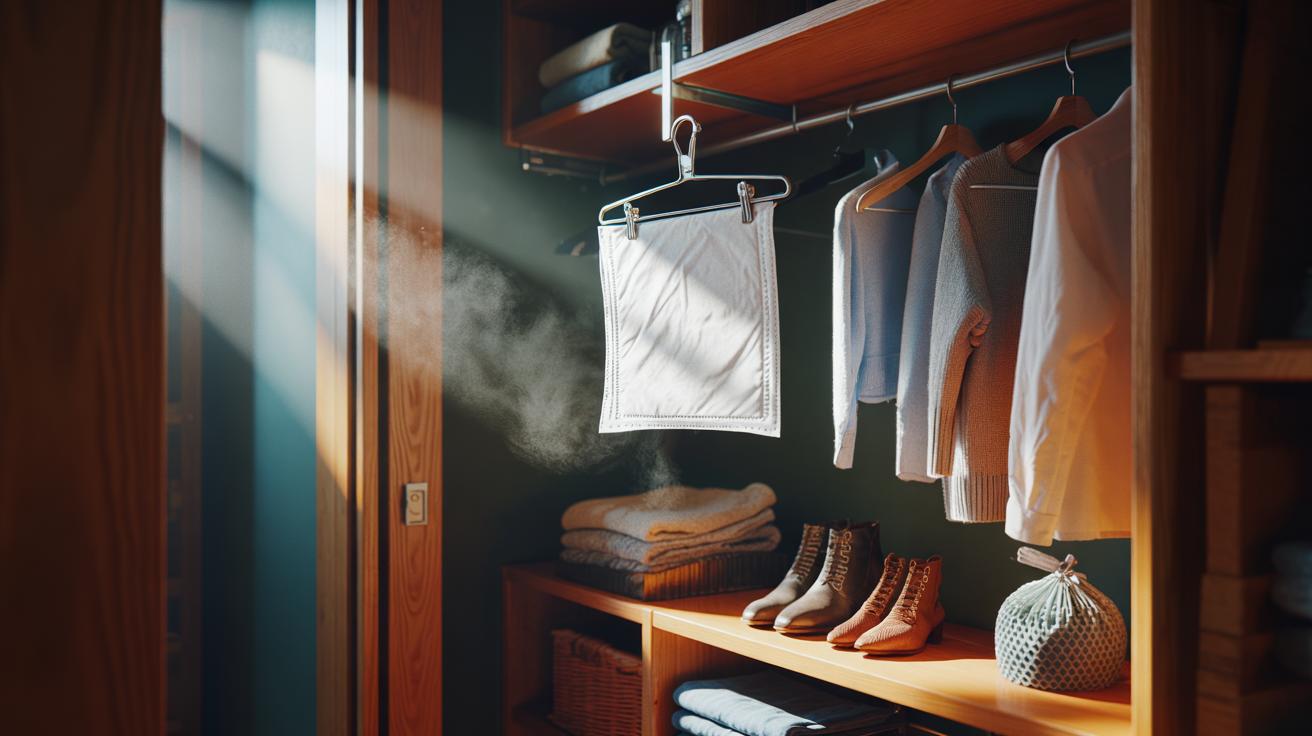
Start with a quick reset: 1) Empty the closet’s floor, 2) Wipe skirting and shelves with a barely damp cloth, 3) Leave doors open for 30 minutes. Dry is vital. If surfaces feel cool and clammy, you’re priming odours to return. Now position dryer sheets. Slip one behind a storage basket, one on the top shelf near knitwear, and one in each shoe you wear least. Avoid direct contact with silk, untreated leather, or delicate wools; the conditioning agents can mark. Use a paper clip or small binder clip to fix sheets inside corners so they don’t drift down.
Replace every two to three weeks in summer, monthly in winter. Date them with a pen so you can literally “see freshness anytime” at a glance. For boots, fold a sheet into thirds and tuck at the toe, not the heel, to maximise air movement. If space is cramped, cut sheets in half and distribute widely rather than stacking multiples in one spot. Airflow matters more than volume of fragrance. A little scent in many places beats a perfumed hotspot that fades fast.
| Location | Sheets Needed | Replace Every | Pro Tip |
|---|---|---|---|
| Shoe pairs | 1 per shoe | 2–3 weeks | Fold into toe for airflow |
| Top shelf | 1–2 | 3–4 weeks | Clip to back corner |
| Hanging rail | 1 mid-rail | 3 weeks | Attach with a peg |
| Luggage/storage bins | 1 per bin | Monthly | Seal in mesh pouch |
To amplify results, add a small desiccant canister or a pot of bicarbonate of soda on the floor, away from pets. That way the sheet scents while the desiccant lowers humidity. Rotate sheets during your laundry day ritual; it takes seconds and keeps the cycle frictionless. Consistency wins over intensity, every time.
Choosing Safe, Sustainable Options
If allergies or sensitivities are part of your household, pick fragrance-free or lightly scented sheets labelled hypoallergenic. These still tamp down static and gently freshen stale air without a perfumey wallop. For nurseries or box rooms, go for low-VOC formulations and avoid heavy musk notes that linger. Freshness should be a whisper, not a shout. Plant-derived conditioners are increasingly common and kinder to skin. As always, keep sheets out of reach of curious pets and toddlers—they smell nice, but they’re not toys.
Sustainability does not have to be an afterthought. Seek compostable cellulose bases and brands that avoid quaternary ammonium compounds where possible. Some manufacturers offer recycled-fibre sheets or refillable scent sachets that perform similarly in closed spaces. You can also extend a used sheet’s life by sliding it into drawers as a barrier against dust, or using it to lift lint from coat collars before recycling. Tiny acts, multiplied across a home, reduce waste without sacrificing comfort.
Packaging matters too. Choose cardboard over plastic wraps and buy multi-packs to cut transport emissions per use. Store sheets in an airtight tin so they don’t desiccate before deployment. If you prefer essential oils, dab a drop onto an old dryer sheet and seal in a mesh pouch—instant, custom aroma with less product. The goal is balance: enough scent to signal cleanliness, minimal impact on air quality and the planet.
When Dryer Sheets Aren’t Enough: Reinforcements and Red Flags
There are times the mustiness fights back. If odour rebounds within 24 hours of a fresh sheet, suspect hidden damp. Check skirting, ceiling corners, and the floor behind storage boxes. A sweet, earthy note often indicates mould, not mere staleness. In that case, clean hard surfaces with a mild detergent solution, launder or sun-air garments, and measure humidity. A compact dehumidifier set to around 50% RH can stabilise conditions in older properties where ventilation is tricky.
Bring in passive helpers. A tin of bicarbonate of soda, a sachet of activated charcoal, or a bag of zeolite can absorb odours at the source while dryer sheets provide the finishing note. Vacuum the closet floor with a HEPA filter to lift odour-holding dust. Replace wooden hangers that smell “closed-up”; sand and sun them if you can. Avoid sealing everything in plastic—air needs pathways. Freshness is as much about movement as it is about perfume.
Red flags? Visible spotting on walls or a tide mark along the skirting demands attention. Investigate for leaks, bridging damp, or a cold bridge causing condensation. If symptoms persist, seek professional advice rather than doubling down on fragrance. Remember: dryer sheets mask, they don’t mend. Use them as a smart overlay while you remedy fabric clutter, humidity spikes, and poor airflow. That’s the arsenal that keeps a closet sweet day after day, season after season.
Used thoughtfully, dryer sheets turn wardrobes from stale to spirited with very little faff. They’re quick to deploy, easy to rotate, and budget-friendly, giving your clothes a pleasant first impression while you handle the heavier lifting of moisture control and regular airing. Pair them with desiccants and a monthly clear-out, and you’ll keep mustiness at bay without chemical overload. Freshness becomes visible in your routine the moment you date, place, and replace. What small tweak will you try this week to make your closet feel like a boutique every time you open the door?
Did you like it?4.6/5 (24)